

Family history and temperament
Anxiety often runs in families, and some children are cautious by nature from an early age.
Your heart pounds before a test or a start line, your mind replays the worst case, and sleep comes late. We help you practice a steadier stress response alongside your current care.
The short answer
Anxiety is worry and physical tension that can flare before a big moment or hang on for weeks. At True Performance in Rancho Santa Fe, CA, we offer training for a calmer stress response with neurofeedback set up from a qEEG brain map. It works alongside your therapist, physician and any medication, never in place of them.
Overview
The night before a final, your stomach turns. On race morning your hands shake. Some days there is no event at all, and your mind still runs through every way things could go wrong.
That alarm feeling is the body bracing for a threat. When it fires too often, or will not settle afterward, it wears down sleep, focus and patience.
Feeling keyed up before a big moment is normal. Trouble starts when nerves take over. A mind goes blank on questions you knew, shoulders tighten on the first serve, sleep slips the week before a meet.
Training gives students and athletes structured practice with a calmer, steadier state.
We do not evaluate for anxiety or prescribe medication. We look at how your brain and body handle stress, then offer calming brainwave training with neurofeedback. It is paced to how you respond, coordinated with your therapist or physician on request.

Understanding
Anxiety is a feeling of worry, fear or unease, often with physical signs such as a racing heart, tense muscles or an upset stomach. Occasional anxiety is a normal part of life. When it does not go away, shows up in many situations or disrupts daily life, it may be an anxiety disorder needing professional care.
The brain reads a test, a game or a worry as a threat.
The stress response speeds the heart and tightens the muscles.
When it stays switched on, sleep and focus start to slip.
The re-check
We repeat your stress, sleep and focus checks as sessions go on. If nothing is changing, we tell you and adjust the plan or point you to other care.
Young children often show worry through behavior: clinging at drop-off, tears, stomachaches or trouble falling asleep. Older children and teens may turn irritable, pull back from school or sport, or lie awake replaying the day.
Parents decide about training together with their child's physician.
Adults often describe a mind that will not switch off: rehearsing conversations, checking and rechecking, waking at 3 a.m. with a list. The body joins in with a tight jaw, shallow breathing or a knotted stomach.
Many keep performing at work while paying for it in sleep and patience.
Your primary care provider, a psychologist, a psychiatrist or another licensed mental health professional. Talk therapy such as cognitive behavioral therapy and prescribed medication are the standard options. Our training adds practice alongside them, and you never change a medication without your prescriber.
The line between everyday worry and an anxiety disorder is explained in the National Institute of Mental Health overview of anxiety disorders.
The CDC guide to anxiety and depression in children describes how worry can show up in a child.
Symptoms
Causes
Anxiety often runs in families, and some children are cautious by nature from an early age.
Exams, a new school or team, a move, a loss or work pressure can set off anxious feelings or deepen them.
High stakes and perfectionism can turn ordinary nerves into dread before tests and competitions.
Short or broken sleep lowers stress tolerance, and worry then makes it harder to fall asleep.
Some health conditions, heavy caffeine, some medications and a recent concussion can bring on anxious feelings, so we ask.
Our approach
Our training works on function: practice with a calmer stress response, steadier focus and easier settling for sleep. Care can include neurofeedback set up from a qEEG brain map. Each plan is paced to the person and runs alongside their therapist, physician or medication.
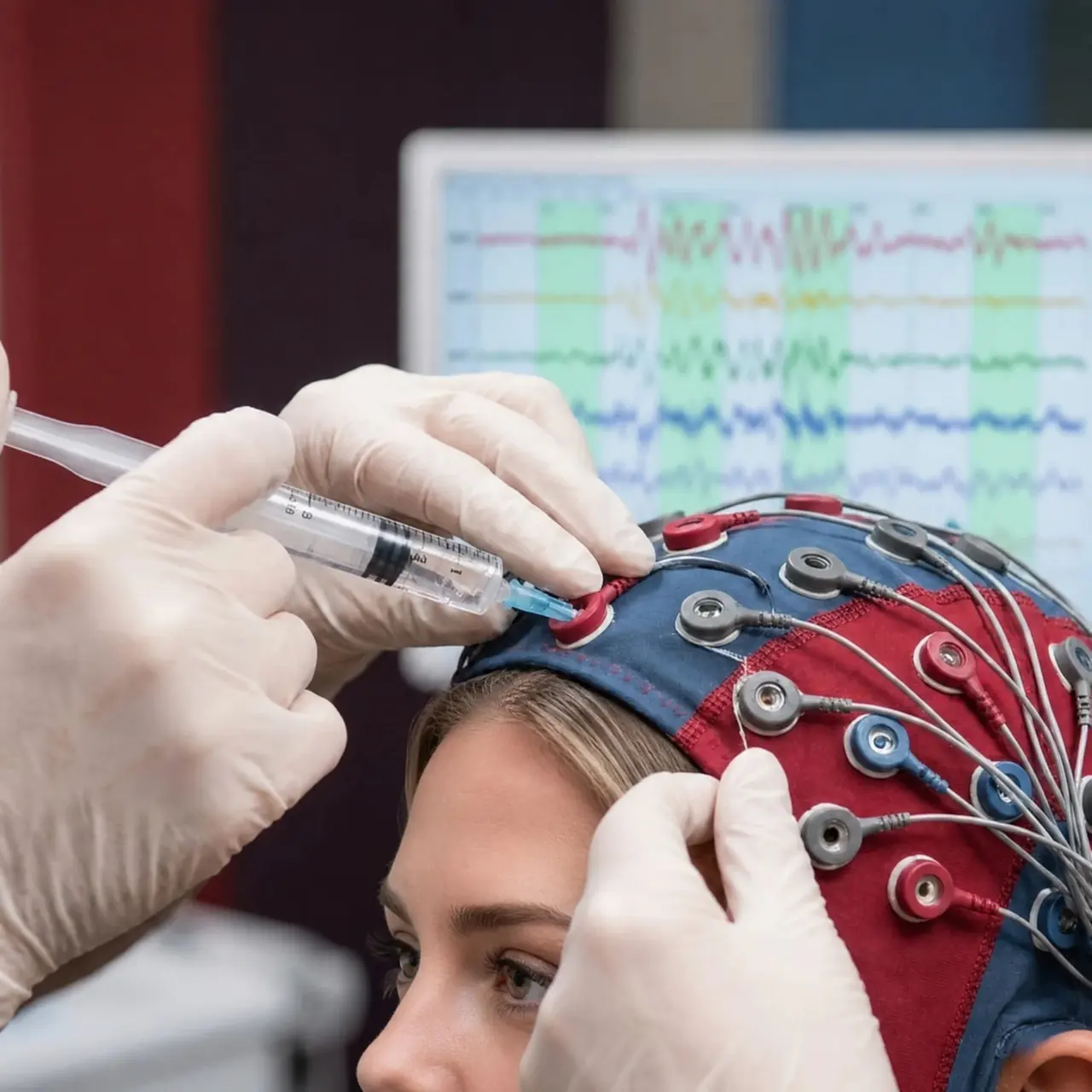
Sensors on the scalp pick up brainwave activity while a show or sound responds in real time. You practice patterns linked with calm, steady attention, and a qEEG brain map recorded first helps choose the targets. Read how neurofeedback sessions for stress and nerves are set up.
Red flags
Some moments need urgent help, not a training plan.
If you are in crisis, call or text 988 any time, day or night, or call 911 or go to the nearest emergency room.
Free, confidential support by call, text or chat is available at the 988 Suicide and Crisis Lifeline.
★★★★★
This place is so incredible. I don’t even know where to start the staff. Every single one of them is top-notch and cares a great deal about me, taking care of me every visit with very detailed and precise treatment. Again, they care so much about you as the patient. It’s one of the most incredible places I have ever been. I came in here with massive anxiety and it’s been three weeks of work, but I am already turning the corner and feeling better. Saving my life in all honesty, I would recommend this place to anybody. They are so incredible. It’s amazing. If you need help, please contact them as they will take fantastic care of you and make sure they get you to the finish line with your problem.

Your clinician
Each plan is overseen by Dr. Jeff McWhorter, D.C., a chiropractor whose practice focuses on functional neurology, concussion rehabilitation, and performance. Neurofeedback sessions are run by our neurofeedback team.
We ask about any therapist, psychiatrist, pediatrician or physician already involved, and we coordinate with them when you ask.
Visit
Sessions take place at our Rancho Santa Fe office: 18029 Calle Ambiente, Suite 507, in Cielo Village. We are about two miles from Lake Hodges, a short drive from across North County San Diego.
The first step
It gives you structured practice with calmer brainwave patterns. Research is still growing and responses vary, so we measure yours.
No, and we do not make one. If worry is new or getting worse, see your physician or a mental health professional first, and we can work alongside their care.
Yes. We work with children of all ages. Parents decide together with their child's physician, and a parent takes part in the full evaluation and gives written consent before training starts.
We explain cost and payment options on your complimentary intro call. The total depends on your evaluation and the number of sessions in your plan.
Journal
Start with a complimentary 15-minute call with our team.