
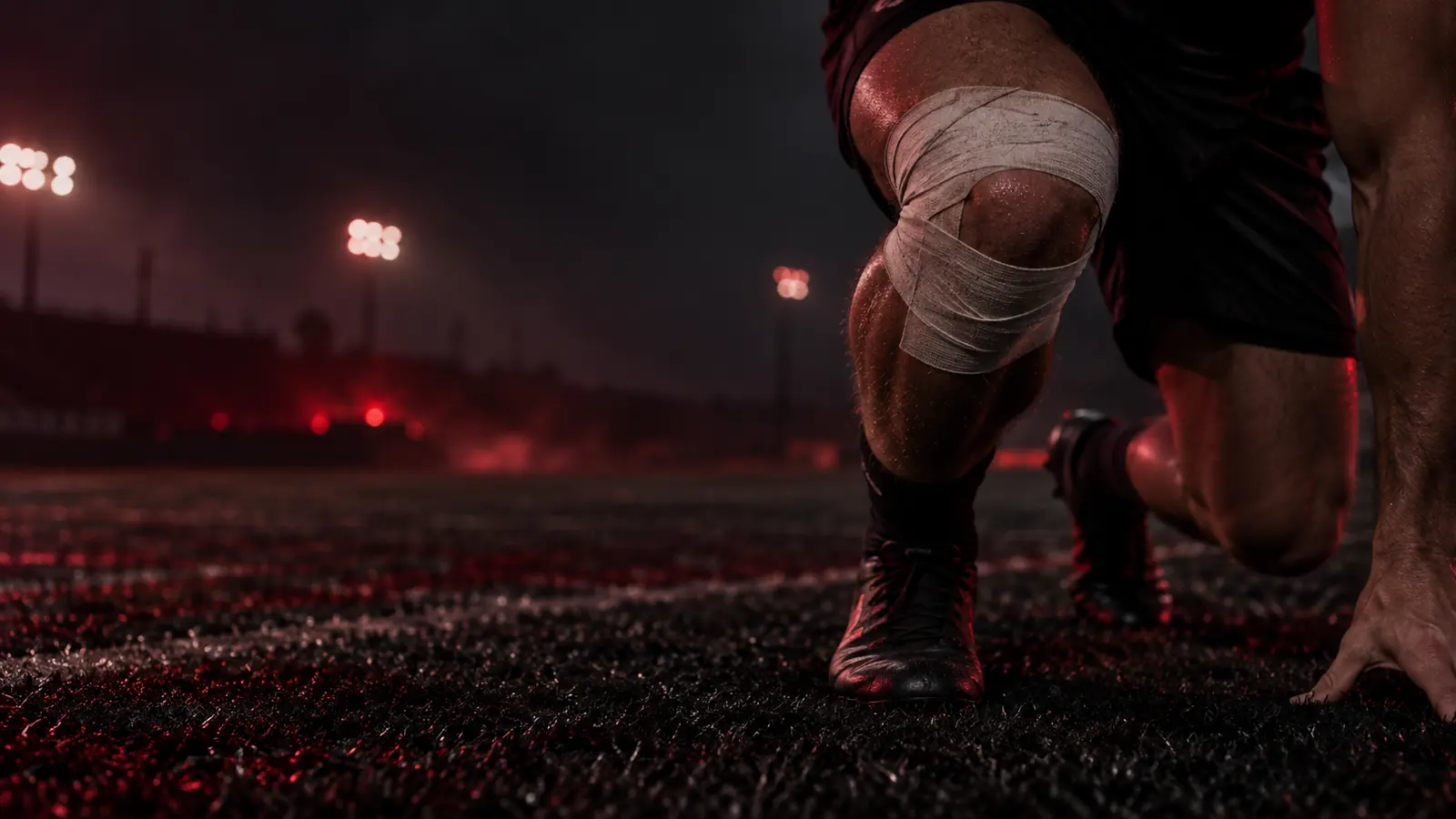
Overuse and training jumps
Running, jumping, deep squats or a sudden rise in training load can irritate the tendons and tissue around the knee.
Stairs, squats and the first steps out of a chair should not make you wince. We work out why your knee hurts and build a plan that keeps you walking, training and playing.
The short answer
Knee pain is aching, sharp pain, swelling or stiffness in or around the knee joint, from an injury, overuse or arthritis. At True Performance in Rancho Santa Fe, CA, we examine the knee along with the hip, ankle and the way you move, then use extremity adjustments, near-infrared light therapy and sports injury rehab.
Overview
Maybe it started after a bad landing on the court. Maybe it built slowly over a season of trail runs, or it just aches more each morning. Now you think twice before a squat or a long walk.
The knee takes load from the hip above and the foot below. When one of them moves poorly, the knee often pays for it.
We check the knee itself, then how you walk, squat and land. Many plans start with extremity adjustments for knee pain and exercises for the muscles that support the joint.
Understanding
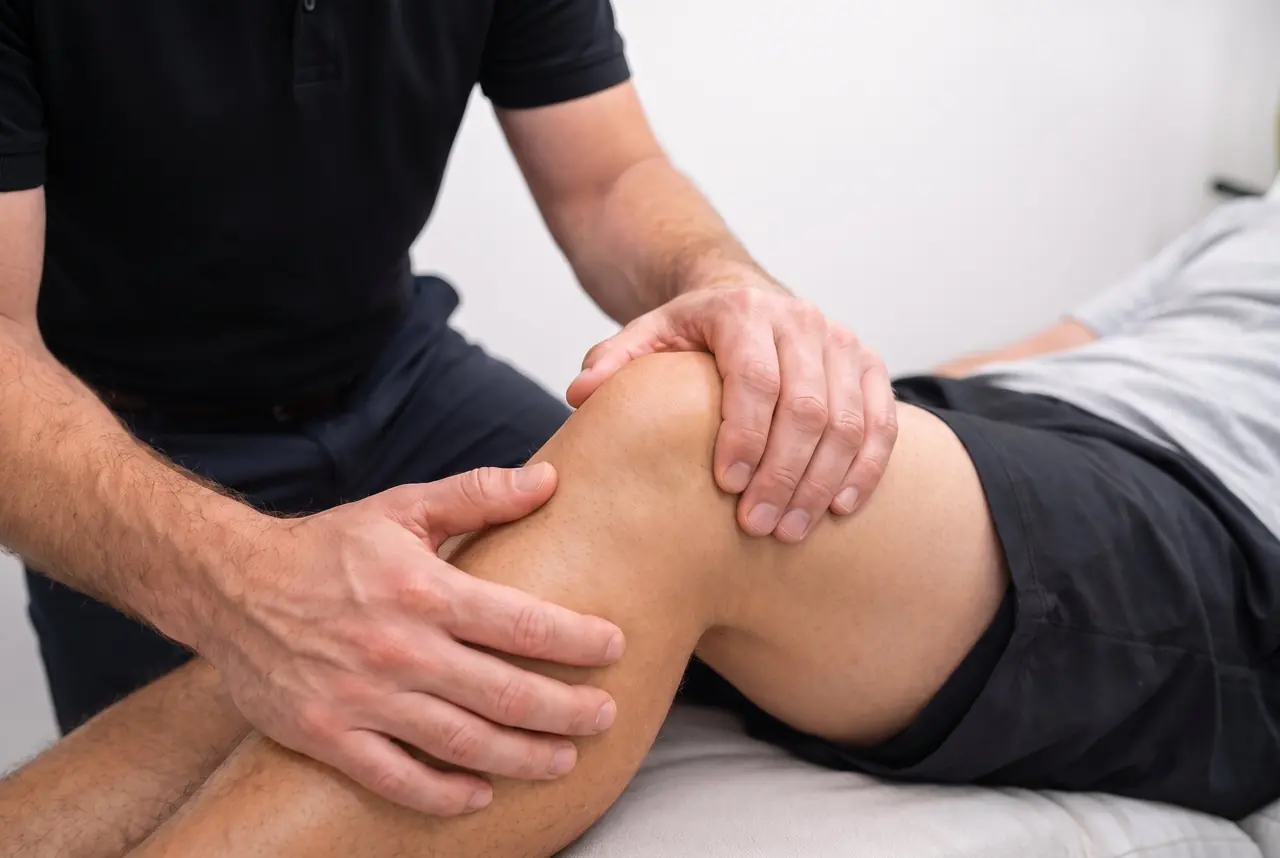
Knee pain is pain, swelling or stiffness in the knee, where the thigh bone, shin bone and kneecap meet. Cartilage, ligaments, tendons and muscles all share the load, so pain can start in any of them after an injury, from overuse or from arthritis.
A tissue in or around the knee gets strained, torn or worn.
The area swells or stiffens, and nearby muscles stop supporting it well.
The hip and ankle change how you move, adding more load to the knee.
The re-check
We re-test how the knee moves and how much load it tolerates as you go. If it is not improving, we change the plan or refer you for imaging or an orthopedic opinion.
Symptoms
Causes
Running, jumping, deep squats or a sudden rise in training load can irritate the tendons and tissue around the knee.
A twist, collision or awkward landing can hurt a ligament, meniscus or tendon. Popping, swelling or instability needs a closer look.
Osteoarthritis can bring aching, stiffness and swelling, often worse after rest or long walks.
Repeated kneeling or pressure can inflame the small fluid sacs and tendons around the knee.
Limited mobility, weak hips or the way you land can change how load passes through the knee.
Our approach
We treat knee pain by finding which tissue is irritated and what in your movement keeps loading it. Care can combine extremity adjustments, near-infrared light and sports injury rehab, with a regenerative therapies consultation when it fits.
Gentle adjustments and mobilization of the knee, hip and ankle, plus exercises for the muscles that hold the knee steady. Read how chiropractic adjustments for the knee and hip fit your exam.
Invisible light is placed over a sore or stiff area while you rest, with no needles. See how near-infrared light is used on a sore knee.
Graded strength, balance and landing work when a knee injury is keeping you out of your sport. Explore rehab for a sports knee injury.
For knee pain that keeps returning, we explain whether any available option fits after your evaluation. Start with a regenerative therapies consultation for knee pain.
Red flags
Many knee problems can wait for a planned exam. Some cannot.
If you notice any of these, get urgent medical care before booking with us.
Source: MedlinePlus guide to knee pain.

Your clinician
Your exam and plan are led by Dr. Jeff McWhorter, D.C., a chiropractor whose practice focuses on functional neurology, concussion rehabilitation, and performance. He works with athletes and active adults.
He watches you walk, squat and balance on one leg, because knee pain often starts with how the whole leg moves. If your findings suggest a tear or another problem that needs imaging, he tells you and refers you before care begins.
Visit
Our office is at 18029 Calle Ambiente, Suite 507, in Cielo Village, Rancho Santa Fe, about two miles from Lake Hodges and its trails. Patients come from Fairbanks Ranch, Del Mar, Carmel Valley and across North County San Diego.
The first step
Rest from the activity that hurts, use ice, and raise the leg when it swells. See a provider if the pain lasts more than a few days or the knee buckles or locks.
Level walking, a stationary bike or swimming are often easier than running or jumping. Stop any activity that raises pain, swelling or instability.
Not always. We recommend imaging or an orthopedic opinion after a major injury, or when the knee locks, gives way or swells a lot.
No. Stiff hips, weak glutes or the way your foot lands can overload the knee. Pain in several joints may point to joint pain that moves between joints, which we evaluate differently.
We can help many people with arthritis move more comfortably through exercise, adjustments and light-based care. Results vary, and we do not change the arthritis itself.
Start with a complimentary 15-minute call with our team.