

Injuries
Sprains, dislocations, fractures and direct impacts can affect the joint or the tissue around it. Some swell at once, others later.
A stiff hip, a swollen knee or a sore wrist can turn a walk or a tennis match into a calculation. We find which structures are involved and plan around the activities you want back.
The short answer
Joint pain is pain in or around a joint, from an injury, repeated use or wear-related changes such as osteoarthritis. At True Performance in Rancho Santa Fe, CA, we examine the joint and the areas that load it. Then we use extremity adjustments, Class IV laser therapy, near-infrared light and PEMF therapy to help you move with less pain.
Overview
You may wonder whether your knee will handle a trail walk, your shoulder a tennis match, or your hip a round of golf. Joint pain turns plans into questions.
A sore joint rarely works alone. Stiffness at the hip, ankle, upper back or shoulder blade can change how force reaches the joint that hurts.
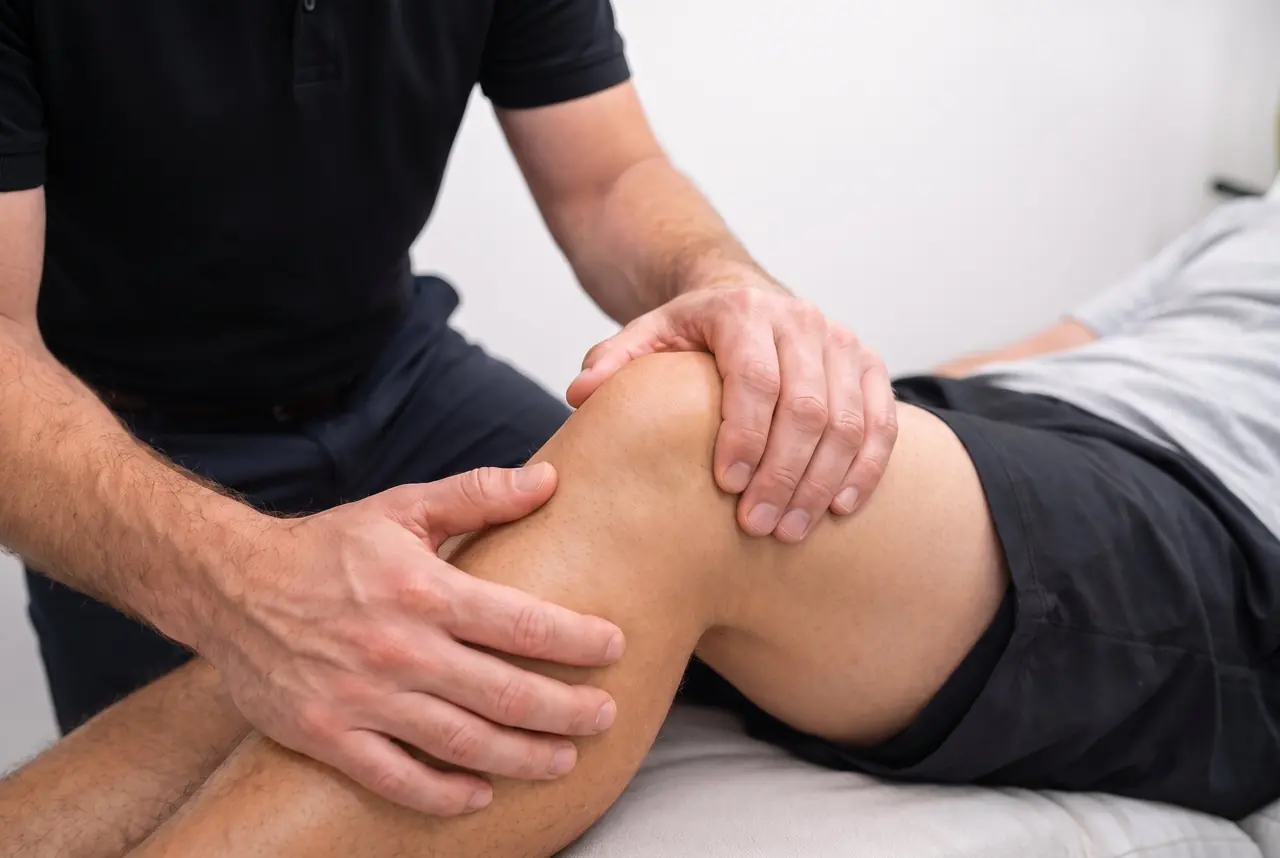
We ask when it started, which motions bring it on and whether you notice swelling, stiffness or weakness. Then we check the joint, the muscles around it and the areas that feed it load.
Many plans include adjustments for the joints of your arms and legs, paced to what the joint tolerates now.
Understanding
Joint pain is pain in or around a joint, where cartilage, ligaments, tendons, muscles and fluid-filled sacs let you bend, twist and carry weight. Several structures cause similar pain, so the pattern matters. Pain with movement, stiffness after rest and swelling each point in different directions.
An injury, overuse or wear irritates the joint or its tissues.
Swelling, stiffness or weakness changes how the joint moves.
Nearby areas compensate, and the load shifts back onto the joint.
The re-check
We re-check range of motion, strength and the tasks that hurt as you progress. If the joint is not responding, we change the plan or refer you for imaging.
Symptoms
Causes
Sprains, dislocations, fractures and direct impacts can affect the joint or the tissue around it. Some swell at once, others later.
Throwing, gripping, running and swinging put the same joint under load again and again.
Wear-related changes cause aching, stiffness and swelling, especially after activity or rest. Imaging does not always match the pain.
A stiff hip, ankle or shoulder blade can change how pressure travels to the joint that hurts.
Our approach
We treat joint pain by matching care to the structures involved and the load the joint tolerates now. Care can combine extremity adjustments, Class IV laser therapy, near-infrared light and PEMF therapy, with performance training for athletes and a regenerative therapies consultation when you want to explore that option.
Adjustments and mobilization for the knee, hip, shoulder, elbow, wrist or ankle, plus exercises for the muscles around it. See extremity adjustments for knees, hips and shoulders.
Laser light is applied around sore muscles, tendons and ligaments near the joint, with timing set by your exam. Read about laser treatment around a sore joint.
Near-infrared light is positioned over stiff or sensitive tissue and paired with the other care in your plan. Learn about near-infrared light for stiff joints.
Electromagnetic pulses are directed at the joint region without needles or force. See PEMF for aching joints.
For athletes, targeted training builds strength and control around the movements that load the joint. Explore performance training built around your sport's joint demands.
If you are curious about regenerative options, regenerative therapies for joint concerns begin with a consultation and an evaluation.
Red flags
Some joint problems need medical care before conservative care.
If you notice any of these, contact your physician or go to urgent or emergency care before booking with us.

Your clinician
Dr. Jeff McWhorter, D.C., a chiropractor whose practice focuses on functional neurology, concussion rehabilitation, and performance, examines both the painful joint and the chain of movement around it. Before founding True Performance in Rancho Santa Fe, Dr. McWhorter served as a chiropractic consultant to the Denver Broncos, working with elite athletes to improve recovery and performance.
That background shapes joint care for golfers, riders, runners and racquet players, and for anyone who simply wants to walk without pain.
Visit
Our office is at 18029 Calle Ambiente, Suite 507, in Cielo Village, Rancho Santa Fe. It sits near Lake Hodges and less than eight miles from the Del Mar Fairgrounds, an easy drive for patients from Del Mar, Solana Beach, Encinitas and Carlsbad.
The first step
Pain in many joints at once can come from inflammatory or autoimmune conditions, infections, medications or other medical problems. New pain in several joints, especially with fever, rash, warmth or swelling, should be checked by a medical provider first.
Joint pain becomes more common with age, partly because osteoarthritis becomes more likely. Worsening is not inevitable, and imaging changes do not always match how you feel or function.
Low-impact activities such as walking, cycling, swimming and controlled strength work are usually easier on the joints. Start gradually and back off if pain, swelling or instability increase.
Pace demanding tasks, take movement breaks and adjust repetitive activities. Mobility and strength exercises that do not flare the joint help most.
We explain cost and payment options on your complimentary intro call, before you book an exam.
Low-impact activities such as brisk walking, cycling and swimming do not put stress on the joints, according to the CDC's guide to activities for arthritis.
Start with a complimentary 15-minute call with our team.