

Sleep changes
Too much or too little sleep is a common trigger.
When migraine brings dizziness, light sensitivity and days of fog, life gets planned around the next attack. We work on the balance and sensory side of migraine, alongside your physician's care.
The short answer
Migraine is a neurological condition with recurring headaches that can bring nausea, dizziness and sensitivity to light, sound and motion. At True Performance in Rancho Santa Fe, CA, we test balance, eye movement and sensory tolerance, then use GyroStim and TransLingual NeuroStimulation (TLNS) with guided balance and eye-movement exercises as drug-free support alongside your physician's migraine care.
Overview
The pain is only part of it. Before an attack you may feel foggy or irritable, and afterward you may feel drained for a day or two.
For some people the hardest part is the dizziness. Bright roads, busy stores and screens become hard to face, even between attacks.
Your physician confirms migraine and manages any medicine. We look at the balance, vision and sensory problems that ride along with it.
That can include TLNS sessions paired with sensory exercises when light, sound or motion sensitivity is part of your pattern.
Understanding
Migraine is a neurological condition, not just a bad headache. Episodes often bring throbbing pain on one side of the head, nausea and sensitivity to light, noise and smells, and they can last hours to days. Some people also have dizziness or a visual aura.
A trigger, such as poor sleep or stress, meets a sensitive nervous system.
Nerve signals, brain chemicals and blood vessels stop working normally.
Pain and sensory symptoms build, then fade over hours or days.
The re-check
We track your symptom diary and re-test balance and sensory tolerance as you go. If nothing is changing, we adjust the plan or tell you so.
The prodrome can start hours or days early, with yawning, cravings or mood changes. Some people then get an aura, usually vision changes that last up to an hour.
The headache phase follows and can last hours to days. In the postdrome, many people feel exhausted, foggy or dizzy for up to two days.
Source: NINDS overview of migraine.
Symptoms
Causes
Too much or too little sleep is a common trigger.
Emotional stress and physical strain can set off an attack, sometimes on the weekend after a hard week.
Low blood sugar, too much alcohol and changes in caffeine can all play a part.
Changes around the menstrual cycle or pregnancy are an important trigger, one reason migraine is more common in women.
Bright or flashing lights, loud noises, strong smells and sudden weather changes can all start an episode.
Migraine often runs in families, which can set up the sensitivity that triggers act on.
Our approach
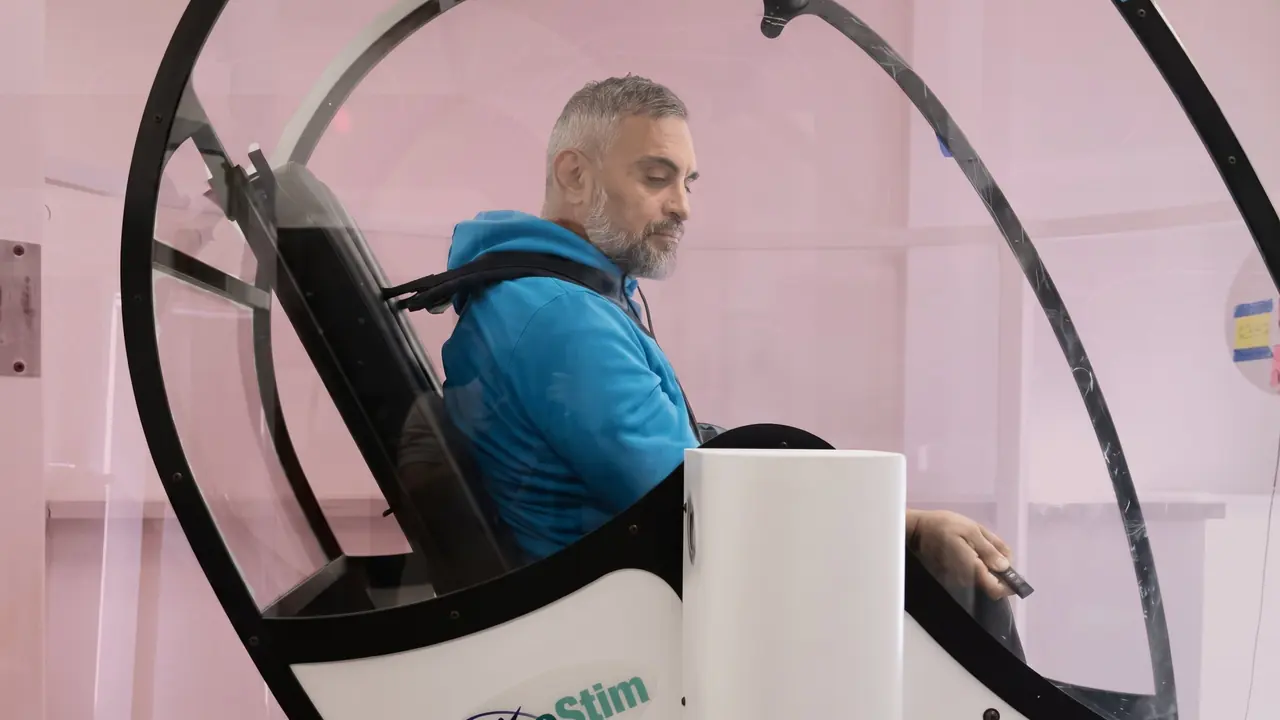
We support migraine care by testing the balance, eye-movement and sensory problems that come with your attacks, then retraining them directly. Care can combine guided balance and eye-movement exercises with GyroStim and TransLingual NeuroStimulation (TLNS), chosen from your exam and coordinated with your physician.
Rancho Santa Fe only
When attacks bring dizziness, imbalance or trouble in busy visual places, a computer-controlled chair adds measured motion with target tasks. Speed and length follow your tolerance. Read about GyroStim for the balance side of migraine.
Gentle pulses through a small device on the tongue are paired with balance and sensory exercises. It may fit when dizziness or light and sound sensitivity come with your headaches. Learn how neurostimulation through the tongue is used.
Red flags
Most migraine attacks follow a familiar pattern. A headache that breaks the pattern needs a physician, sometimes right away.
If a headache comes with any of these, call 911 or go to the emergency room before anything else.

Your clinician
Your care is planned by Dr. Jeff McWhorter, D.C., a chiropractor whose practice focuses on functional neurology, concussion rehabilitation, and performance.
He looks at where your symptoms show up, which settings make them worse and how quickly you settle afterward. The plan fits around your work, family and the care your physician already directs.
Visit
Our office is at 18029 Calle Ambiente, Suite 507, in Cielo Village, Rancho Santa Fe, about two miles from Lake Hodges. Patients come from across North County San Diego, and some travel from much farther; read what to know before traveling in for care.
The first step
A headache is a symptom with many causes. Migraine is a neurological condition that can bring nausea, sensitivity to light and sound, dizziness and visual changes along with head pain.
The headache phase can last hours to days. The foggy, drained postdrome can add up to two days more.
Yes. Some people get dizziness and motion sensitivity with or without head pain. When migraine brings spinning or tilting, the balance side often needs its own plan.
Keep regular sleep and meals, drink enough fluids and keep caffeine steady. A headache diary helps you and your physician spot triggers, and a quiet, dark room helps during an attack.
No. Medicine stays with your physician. We add drug-free rehabilitation for the balance and sensory symptoms around it.
We explain cost and payment options on your intro call, before you book an exam. The total depends on your exam and how many sessions your plan needs.
Start with a complimentary 15-minute call with our team.