
Falls and accidents
Falls, car crashes and other sudden impacts can strain muscles and ligaments or damage discs, joints and vertebrae. How much it hurts does not always show how serious it is.
The fall or the crash is behind you, but bending, turning or carrying still hurts. Once serious injury is ruled out, we help you move with more comfort, one careful step at a time.
The short answer
A spinal injury is damage to the bones, discs, joints, ligaments, muscles or nerves of the spine, usually from a fall, crash, sports hit or repeated strain. At True Performance in Rancho Santa Fe, CA, care begins only after serious injury is ruled out, then combines modified spinal adjustments, Class IV laser therapy and near-infrared light therapy with movement work.
Overview
You were checked, nothing was broken, and yet getting out of the car still hurts. Turning your head to back out of the driveway feels stiff. Carrying groceries makes it worse.
That is common. A fall or collision can strain muscles and ligaments or irritate discs and joints, and those tissues often settle more slowly than bruises do.
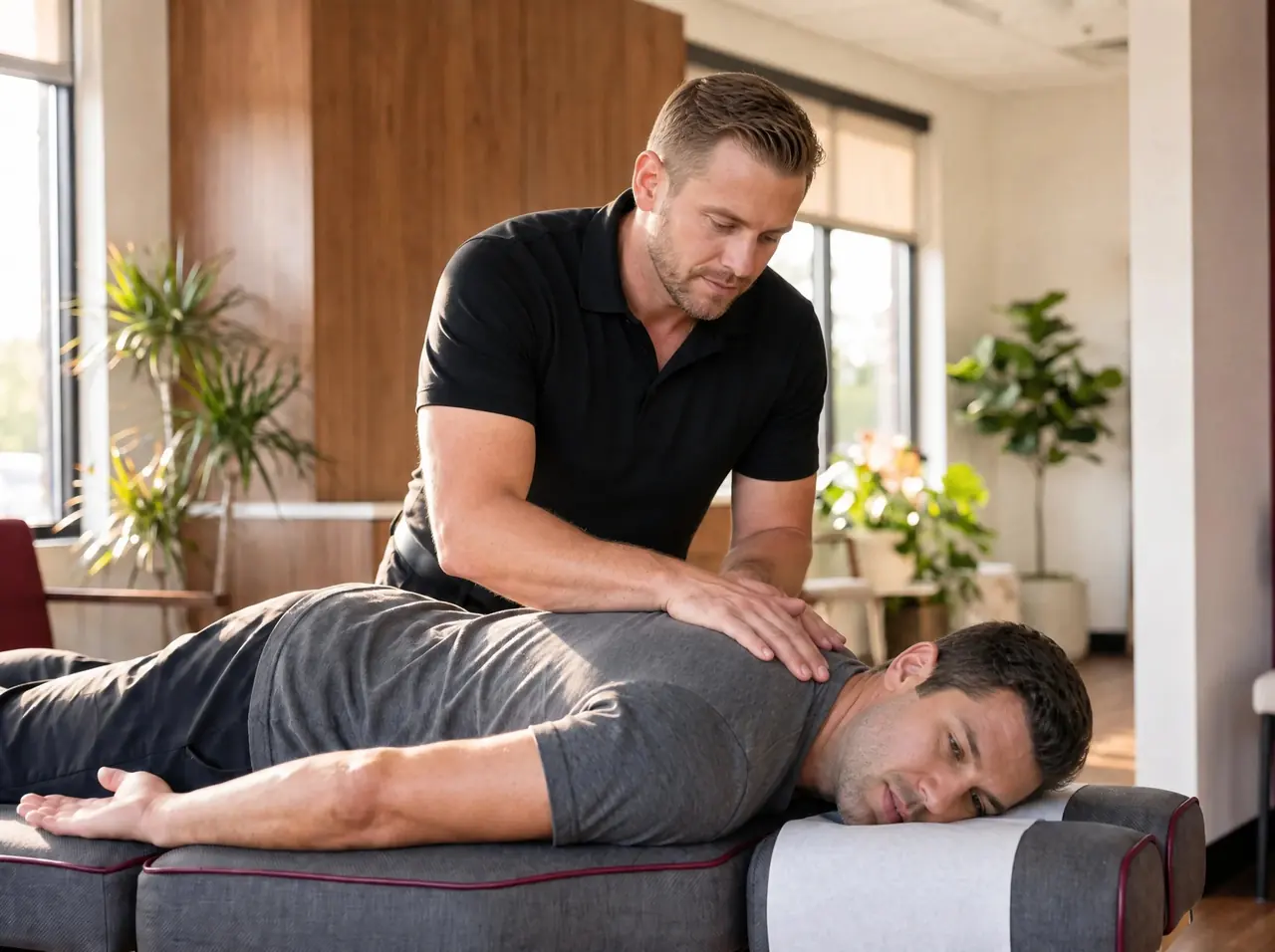
We start with how the injury happened, what hurts and which movements are hard. Once a physician has ruled out a fracture, instability or spinal cord involvement, we may use careful spinal adjustments after medical clearance along with gentle mobility work.
Understanding
A spinal injury is damage to any part of the spine: the vertebrae, discs, joints, ligaments, muscles or nerves. Some are strains and sprains that respond to conservative care. Others involve a fracture, an unstable spine or the spinal cord, and those need emergency and medical treatment first.
A sudden force or repeated strain overloads part of the spine.
Muscles, ligaments, discs or joints become irritated or damaged.
Pain and guarding then limit how you bend, turn and walk.
The re-check
We re-check your mobility, strength and comfort at each visit. If anything worsens or new nerve signs appear, we stop and send you back to your physician.
Symptoms
Causes
Falls, car crashes and other sudden impacts can strain muscles and ligaments or damage discs, joints and vertebrae. How much it hurts does not always show how serious it is.
Contact, falls, heavy lifting and sudden twisting put large forces on the spine. Symptoms may follow one clear moment or build after a jump in training.
Long hours at a desk, frequent lifting and long drives can slowly overload spinal muscles and joints.
Disc narrowing and arthritis can lower the spine's tolerance for strain. They do not always cause pain on their own.
Our approach
We treat spinal injuries conservatively, and only after serious injury is ruled out or medically managed. Care can combine modified spinal adjustments, gentle mobilization and exercise with Class IV laser or near-infrared light therapy for sore soft tissue, paced to your stage of recovery and coordinated with your physician.
After clearance, care may include modified adjustments, gentle mobilization, movement guidance and rehabilitation exercises. Adjustments are never used when the exam suggests a fracture or instability. See how we use gentle, modified spinal adjustments after an injury.
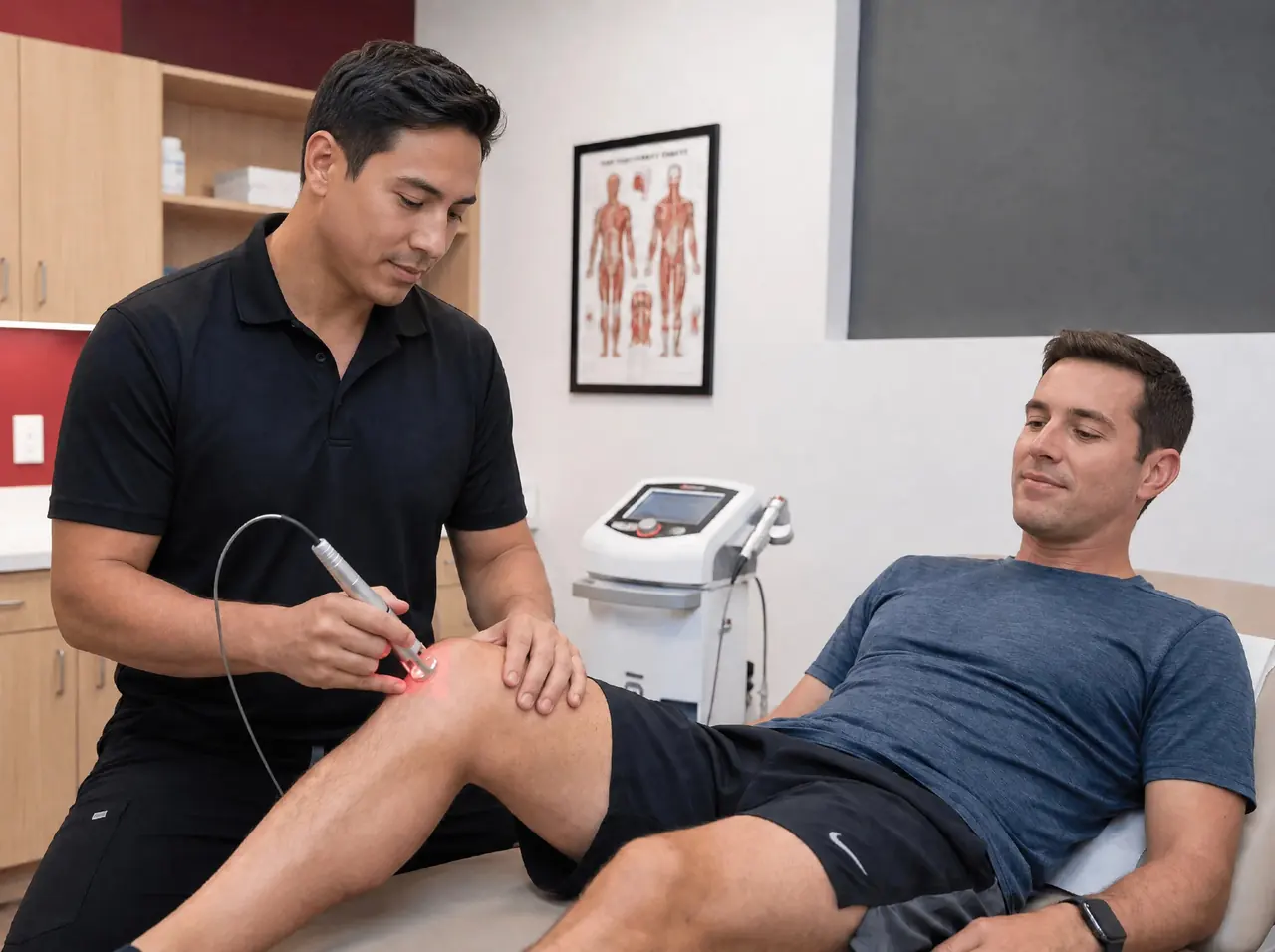
Concentrated light can be aimed at sore muscles, ligaments and other soft tissue around the injury. It does not replace imaging or medical care for structural damage. Learn about Class IV laser therapy for sore soft tissue.
Near-infrared light reaches below the skin and can be placed over stiff or sore areas while you rest. Read about near-infrared light over stiff, sore areas.
Red flags
Most back and neck strains settle with time and care. Some spinal injuries are emergencies.
If you suspect a spinal injury, call 911, keep the person still and do not move their head or neck until help arrives.

Your clinician
Your care is planned by Dr. Jeff McWhorter, D.C., a chiropractor whose practice focuses on functional neurology, concussion rehabilitation, and performance. He reviews how the injury happened, your imaging and any medical instructions before choosing a technique.
His neurological lens adds checks of sensation, strength, balance and coordination. The plan respects your physician's limits for work, driving and sport.
Visit
Our office is at 18029 Calle Ambiente, Suite 507, in Cielo Village, Rancho Santa Fe, close to Lake Hodges and the San Dieguito River Park. Patients come from across North County San Diego and beyond.
The first step
Call 911 and keep the person still. Do not twist, bend or lift their head or body, and do not remove a helmet if a spinal injury is suspected.
It depends on the injury. Care waits until fractures, instability and spinal cord problems are ruled out, and techniques are modified to your exam and stage of recovery.
We review how the injury happened, your symptoms, past treatment and any imaging. Then we test mobility, strength, sensation and balance.
Not always, but bring any imaging you already have. If your exam raises concern about a fracture or nerve damage, we refer you for imaging or medical care first.
Sometimes. Stiffness and guarding can linger after the tissue recovers, which is why we also offer care for ongoing back pain after an injury.
Start with a complimentary 15-minute call with our team.