
Blocked blood flow
A clot or narrowed artery stops blood reaching part of the brain. This is an ischemic stroke, the most common type.
Discharge is not the end of recovery. When walking, speech, focus or stamina still hold you back, we add chiropractic-based neurological rehabilitation alongside your therapy.
The short answer
Post-stroke care is rehabilitation for changes a stroke leaves behind, such as weakness, poor balance, speech problems and fatigue. At True Performance in Rancho Santa Fe, CA, we help people working to regain balance, coordination, and movement after a stroke or head injury, often in coordination with their medical providers, adding TLNS, neurofeedback, DynaVision and nerve stimulation.
Overview
The hospital stay is over and the therapy visits are winding down. Yet your arm is still weak, walking takes effort, or long conversations leave you exhausted.
Recovery after a stroke has no set end date. Many survivors keep improving for months or years with continued practice.
We add focused, brain-based work to the therapy you already have. Tools such as TransLingual NeuroStimulation after a stroke pair stimulation with task practice, always within the limits your medical team has set.
Understanding
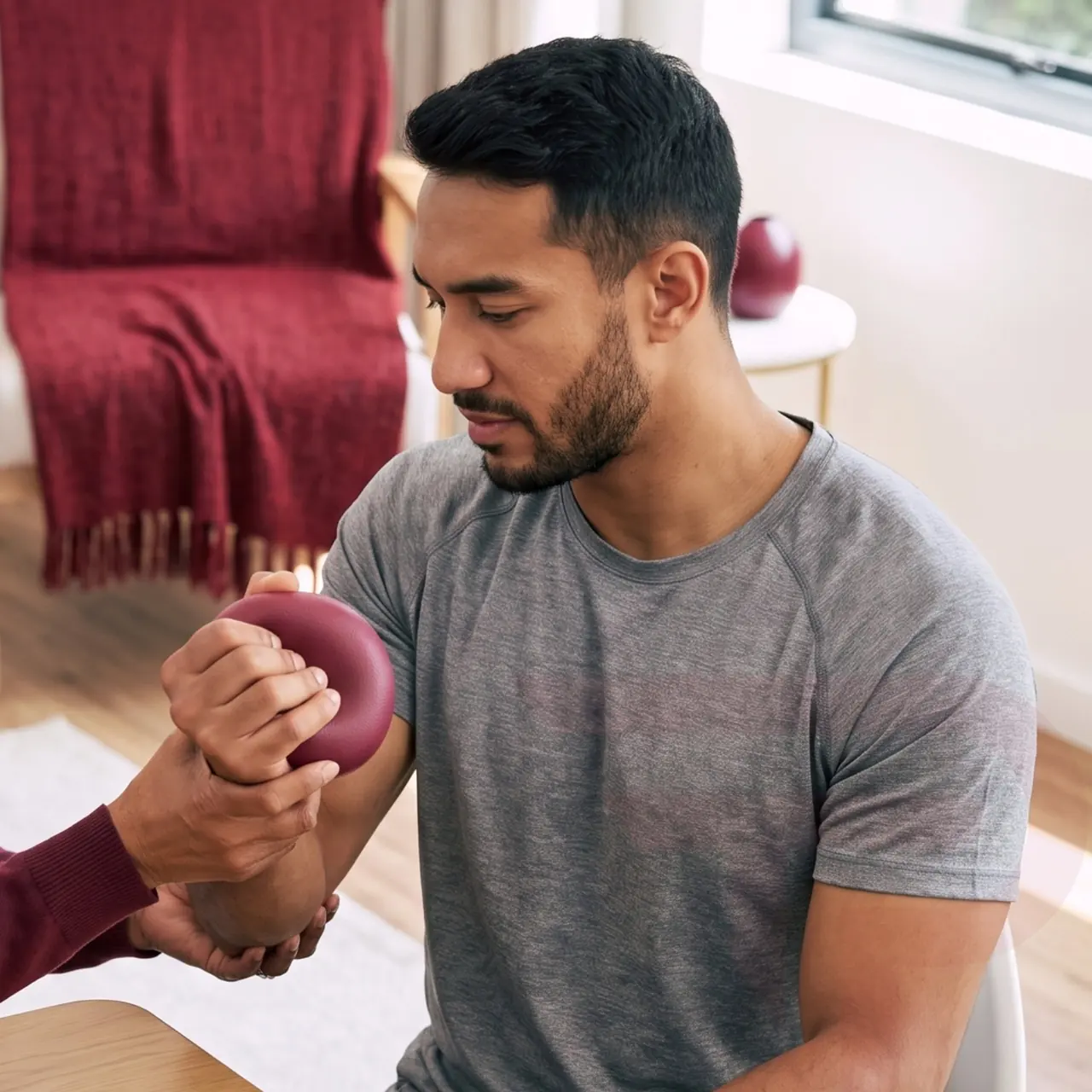
A stroke happens when blood flow to part of the brain is blocked or a blood vessel bleeds. Brain cells in that area stop working normally, which can affect movement, speech, thinking, vision and mood. Rehabilitation helps other brain areas take over some of that work.
A clot blocks blood flow, or a vessel breaks and bleeds.
Brain cells in that area are damaged or stop working.
With practice, other brain areas can take over some tasks.
The re-check
We re-test movement, balance and thinking measures as you go. If a measure stalls, we change the plan and tell you so.
An ischemic stroke, the most common type, happens when a clot or blockage stops blood flow. A hemorrhagic stroke happens when a blood vessel ruptures and bleeds in or around the brain.
A transient ischemic attack, or TIA, causes brief stroke-like symptoms and still needs emergency evaluation.
Symptoms
Causes
A clot or narrowed artery stops blood reaching part of the brain. This is an ischemic stroke, the most common type.
A ruptured blood vessel bleeds in or around the brain. This is a hemorrhagic stroke.
One of the biggest risk factors you can change, and it often causes no symptoms.
Atrial fibrillation, high cholesterol, diabetes and vascular disease raise the risk of clots.
Our approach
We support stroke recovery by testing which abilities are still limited, then retraining them with targeted tools. Care can combine TLNS, neurofeedback guided by a qEEG brain map, DynaVision cognitive training and peripheral nerve stimulation, within your care team's restrictions.
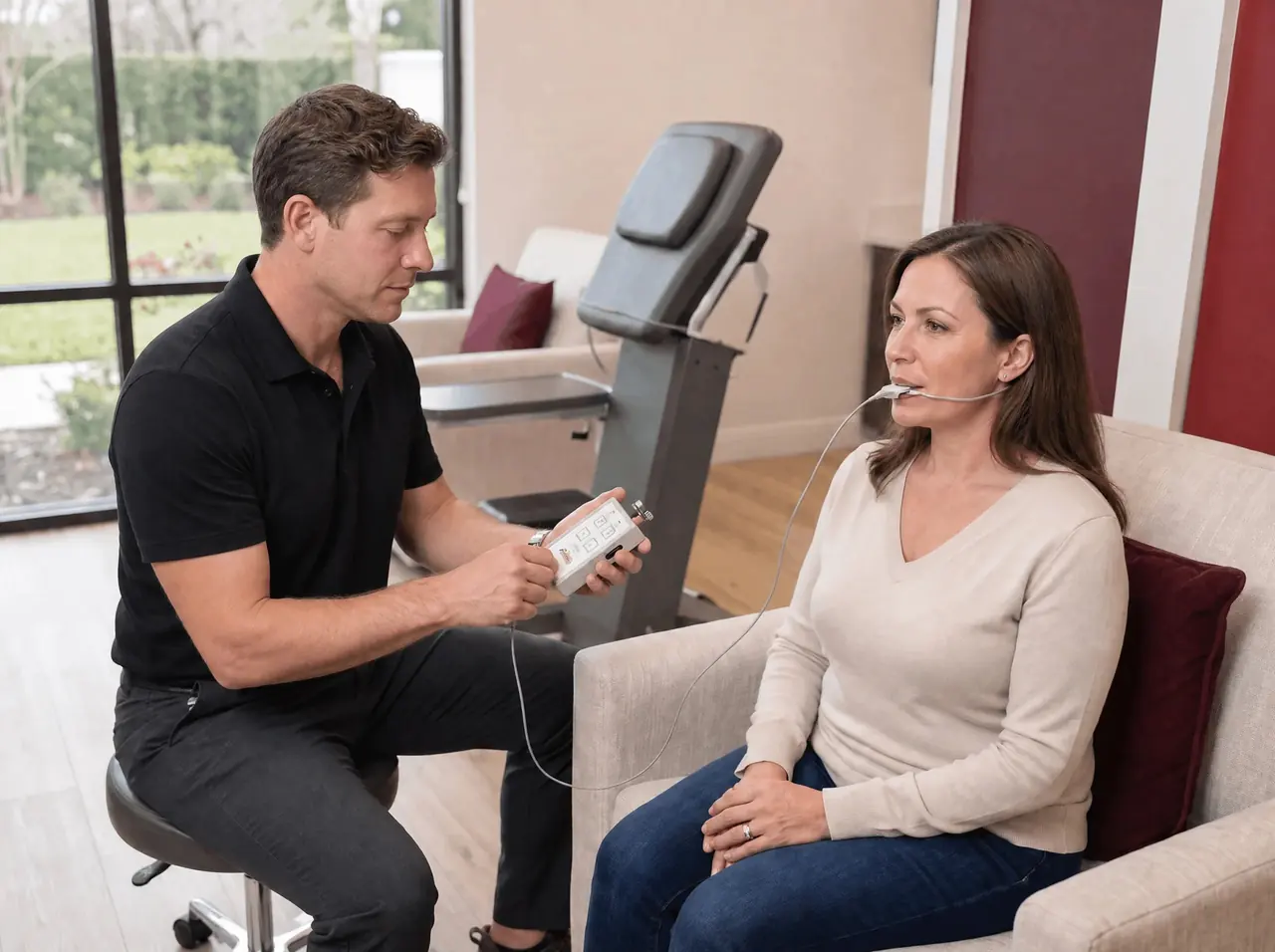
Gentle pulses through the tongue are paired with walking, balance or coordination practice. Read about TLNS paired with movement practice.
Brainwave feedback may help when fatigue, sleep, attention or mood get in the way. See neurofeedback for attention and sleep after a stroke.
A qEEG map adds brain activity data to your exam and helps set neurofeedback goals. Learn about qEEG brain mapping before neurofeedback.
Rancho Santa Fe only
Light-board and computer tasks train visual scanning, attention, reaction time and memory, scored every session. Explore DynaVision visual scanning and reaction work.
When a stroke affects walking, mild electrical input to leg nerves is paired with gait training. See peripheral nerve stimulation for walking.
Your options
| Option | What it involves | When it fits |
|---|---|---|
| Inpatient rehabilitation facility | Daily therapy with a medical team on site | Soon after the hospital, when intensive therapy is needed |
| Skilled nursing or long-term care | Nursing care with therapy at a slower pace | When medical needs or severity call for it |
| Outpatient or home therapy | Physical, occupational and speech therapy visits | Once you are home and able to attend sessions |
| True Performance program | Testing plus TLNS, neurofeedback, DynaVision and PNS | Alongside or after therapy, when progress has slowed |
These are not either-or choices. Your medical and therapy team leads your care, and our work complements it.
Recovery
Every stroke is different. Here is what the American Stroke Association says about the general course, not a set True Performance schedule.
As soon as possible
Rehabilitation should start in the hospital as soon as possible after the stroke.
After leaving the hospital
Where care continues depends on how severe the stroke was: home, a skilled nursing facility, an inpatient rehabilitation facility or a long-term care hospital.
Months to years
Recovery has no set endpoint. Improvements can continue for months or years, even after formal rehabilitation ends.
Sources
Source: American Stroke Association guide to stroke rehabilitation.
Red flags
A stroke is an emergency, even when symptoms fade. Use BE FAST to spot the warning signs.
Call 911, note when symptoms started, and do not drive yourself to the hospital.
Source: CDC stroke signs and BE FAST test.
Cost
Cost depends on your exam findings and which services your plan includes. We explain it before you start.
What your cost depends on
★★★★★
We are seeing Dr. Jeff because my husband had a stroke. We love that he rehab's the brain and we are already seeing so much cognitive improvement. He has only had 7 sessions and we can't wait to see the results. We feel like he is the piece of the puzzle we have been missing and wish we would have known about him a few years ago. We are already telling everyone we know that we feel could benefit from his services.

Your clinician
Your care is planned by Dr. Jeff McWhorter, D.C., a chiropractor whose practice focuses on functional neurology, concussion rehabilitation, and performance. With stroke survivors, he focuses on what matters in your day: walking to the car, following a conversation, getting through an afternoon.
He reviews your reports and current restrictions first, so our work supports your therapy team instead of conflicting with it. When something needs medical attention, he sends you back to your physician.
Visit
Our office is at 18029 Calle Ambiente, Suite 507, in Cielo Village, Rancho Santa Fe, about two miles from Lake Hodges. Patients come from across San Diego County, and some travel much farther; see traveling to Rancho Santa Fe for stroke rehab.
The first step
Progress looks different for everyone. Steadier walking, better hand use, clearer speech, more stamina and needing less help with daily tasks are the kinds of changes your team tracks.
Often, yes. The American Stroke Association notes that improvements can continue for months or years, even after formal rehabilitation ends. We test where you are now and set realistic goals.
Usually, yes. Our services complement your physical, occupational and speech therapy; they do not replace them.
Yes. Bring your reports and restrictions; we plan around your neurology team and therapists so our work never conflicts with theirs.
We go over cost and payment options on your complimentary intro call, before you book. Your total depends on your exam and plan.
Journal
Start with a complimentary 15-minute call with our team.