

Muscle and ligament strains
A quick twist, a heavy lift, a hard workout or hours in one position can overload the tissues that support the spine.
Back pain can turn a golf swing, a long drive or a night's sleep into something you dread. We find what is driving it, then build a plan around how you need to move.
The short answer
Back pain is pain anywhere from the base of the neck to the hips, often from strained muscles, stiff joints, disc problems or wear. At True Performance in Rancho Santa Fe, CA, we check spinal motion, posture, strength and nerve signs, then use spinal adjustment, Class IV laser, near-infrared light and targeted training.
Overview
It started after a heavy lift, a hard workout or a week of long days at the desk. Now it comes back every time you bend, sit too long or swing a club.
Back pain is rarely about one spot. Stiff joints, tight muscles, repeated strain and the way you move can all feed it, so the pattern matters as much as the place.
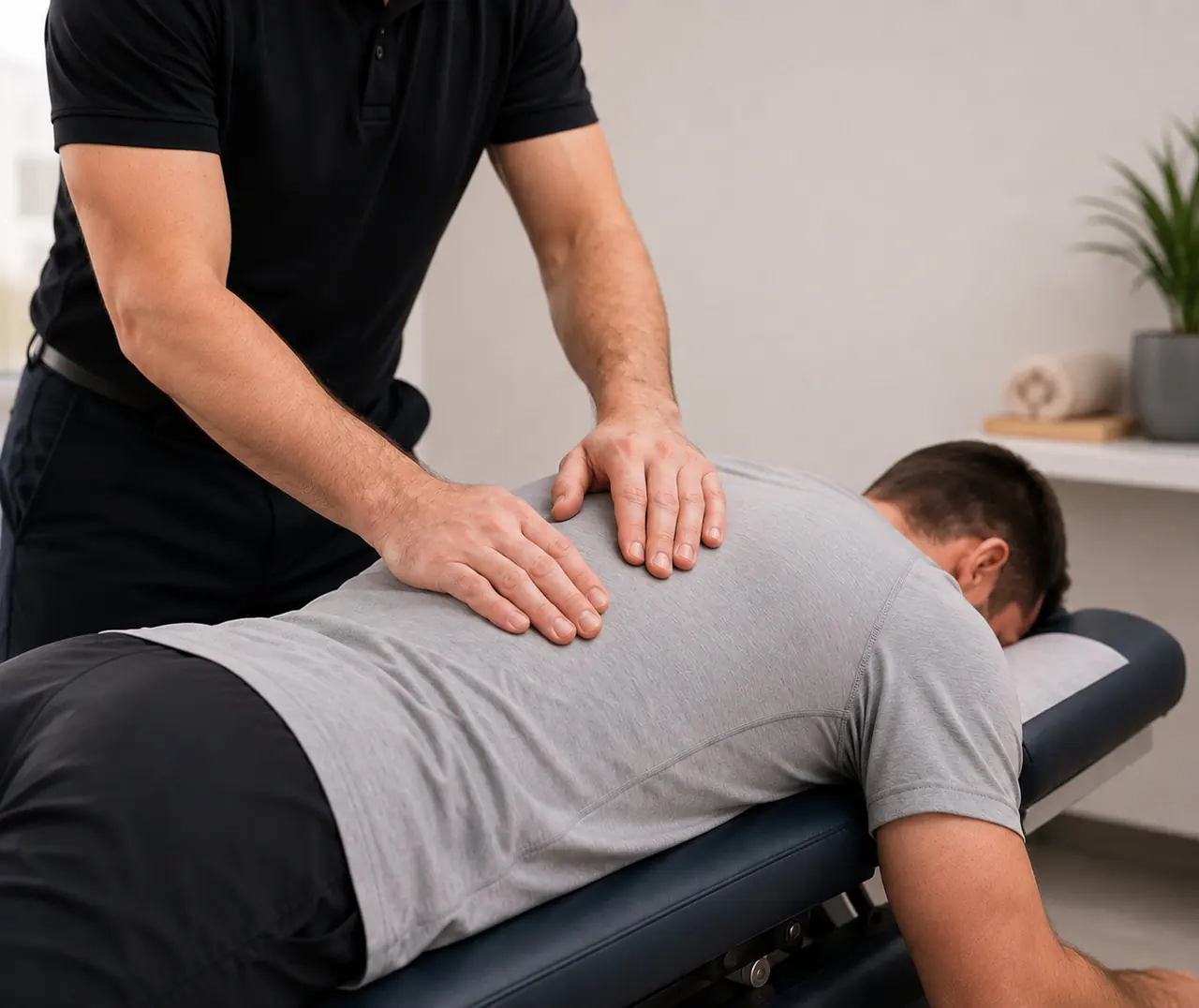
We ask when it began, what makes it worse and what eases it. Then we check spinal motion, posture, strength, balance and signs of nerve irritation. When the exam points to a mechanical cause, care often starts with chiropractic adjustments matched to your back exam.
Understanding
Back pain is pain, stiffness or spasm anywhere along the spine, most often in the lower back. It usually comes from muscles, ligaments, joints or discs, not from serious disease. It can be acute, lasting days to weeks, or chronic, lasting more than three months.
A strain, lift or long posture overloads spinal tissue.
Muscles tighten and joints stiffen to guard the area.
Guarding changes how you move, which keeps the pain going.
The re-check
We re-test your motion, strength and pain at each visit. If you are not improving, we change the plan or refer you for imaging or a medical opinion.
Acute back pain comes on suddenly, often after a strain or awkward movement, and usually lasts a few days to a few weeks. Chronic back pain lasts more than three months or keeps coming back. For chronic pain, the key question is what keeps triggering it.
Source: MedlinePlus overview of back pain.
Symptoms
Causes
A quick twist, a heavy lift, a hard workout or hours in one position can overload the tissues that support the spine.
A bulging or herniated disc can irritate nearby tissue or press on a nerve root. Some people feel it only in the back, others down the leg.
Joint and disc changes, including arthritis and spinal stenosis, can bring stiffness and pain in certain positions.
Scoliosis and other differences in spinal shape can load the back unevenly for some people.
Our approach
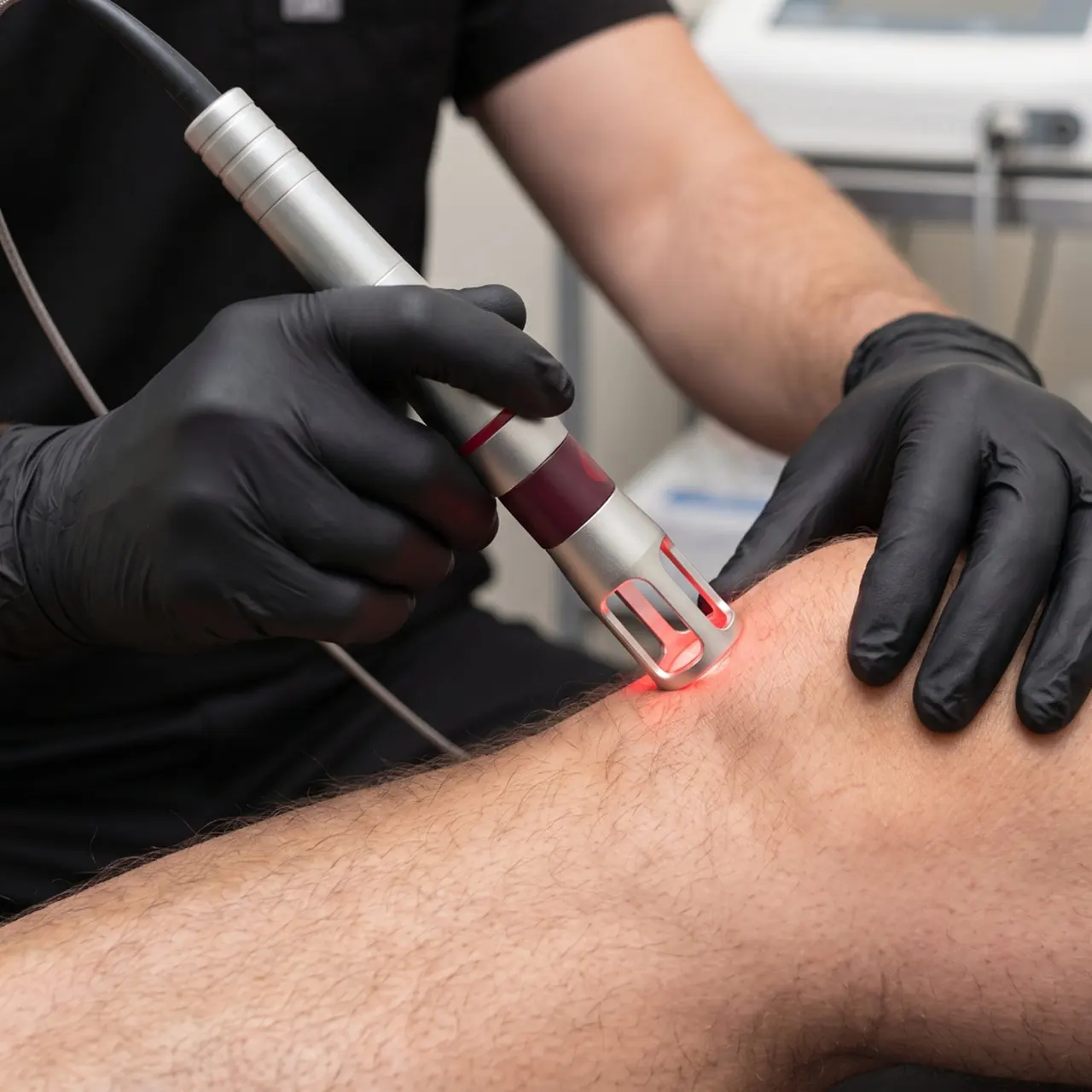
We treat back pain by finding what drives it, then matching care to that cause. A plan can combine spinal adjustments and mobilization, Class IV laser or near-infrared light therapy for sore tissue, and targeted training for strength and control, adjusted as your movement improves.
Non-drug care first, including spinal manipulation, is the approach in the American College of Physicians guideline on low back pain.
Targeted adjustments, joint mobilization, movement coaching and exercises are chosen around the painful area and what you can tolerate. We also talk through posture, workstation setup, sleep position and footwear when they matter. Read about spinal adjustment for a stiff lower back.
Concentrated light is aimed at a sore muscle, joint or irritated area, only where your exam shows it has a job to do. See how focused Class IV laser sessions work.
Light that reaches below the skin can be placed over sore or stiff areas while you rest. Learn about near-infrared light therapy sessions.
Once pain settles, training for rotation, stability and lifting helps you return to sport with control. Explore sport-specific training after back pain.
Red flags
Most back pain improves with time and conservative care. Some signs need a physician first.
If you notice any of these, contact your physician right away or go to the emergency room before booking with us.

Your clinician
Your care is planned by Dr. Jeff McWhorter, D.C., a chiropractor whose practice focuses on functional neurology, concussion rehabilitation, and performance. He looks at the painful area and at how your whole spine, hips and nervous system handle load.
Many patients are golfers, tennis players, riders and hikers, so he plans around the rotation, balance and endurance your days demand.
Visit
Our office is at 18029 Calle Ambiente, Suite 507, in Cielo Village, Rancho Santa Fe, a few minutes from Lake Hodges. Patients come in from Del Mar, Encinitas, Carlsbad and across North County San Diego.
The first step
Book an exam if the pain keeps returning, limits activity, disturbs sleep or travels into the hip or leg. Seek medical care promptly after a major injury or with weakness, fever, numbness or bladder changes.
Back pain may be serious after a major injury or when it comes with worsening weakness, trouble walking, fever or bowel or bladder changes. Pain that escalates quickly should also be checked promptly.
Usually not. Short rest can help, but staying in bed for more than a day or two can make back pain worse, so gentle movement is better.
Pain that travels into the buttock or leg can mean a nerve is irritated. We check for nerve signs and may approach it as pain that travels down into the leg.
Yes. We check the movements your sport demands, then build a return that starts with pain control and ends with sport-specific training.
Start with a complimentary 15-minute call with our team.