
Benign paroxysmal positional vertigo (BPPV)
Tiny calcium crystals drift into the wrong part of the inner ear. Rolling over, sitting up or looking up then brings a brief, intense spin.
The room spins when you roll over, or the floor tilts in a busy store. We test how your balance system handles motion and build a plan around your physician's findings.
The short answer
Vertigo is a false sense that you or the room is moving, most often caused by an inner-ear problem such as BPPV. At True Performance in Rancho Santa Fe, CA, we test balance, eye movement and motion tolerance once your physician has found the cause, then use GyroStim and TransLingual NeuroStimulation (TLNS) with guided balance work.
Overview
Rolling over in bed, looking up at a shelf or turning to check traffic can set it off. For a few seconds or a few hours, the world moves when it should stand still.
Vertigo is a symptom, not a condition in itself. It can start in the inner ear or in the parts of the brain that process balance, so the cause shapes the care.
Your physician finds the cause first. We then test how your balance, vision and body sense work together.
When motion processing is part of the problem, we add computer-guided GyroStim sessions for dizziness, paced to what you tolerate and coordinated with your medical team.
Understanding
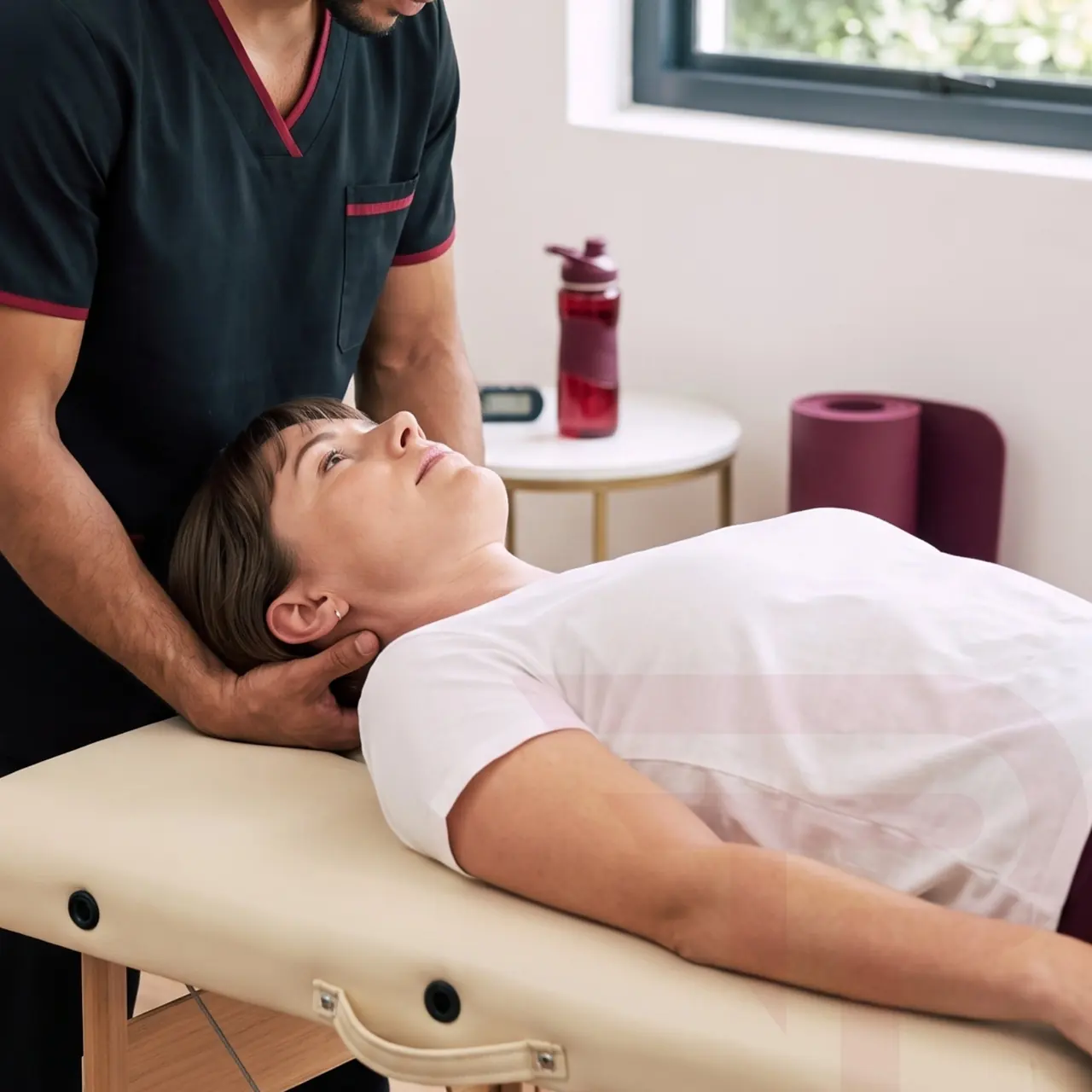
Vertigo is the feeling that you or your surroundings are spinning, tilting or swaying when nothing is moving. Most vertigo starts in the inner ear, the body's balance organ, or in the nerve that carries its signals. Less often it comes from the brain, such as after a stroke or head injury.
The inner ear senses every head movement and reports it to the brain.
An ear or brain problem makes those signals wrong or mismatched.
The brain reads the mismatch as motion, so the room seems to spin.
The re-check
We re-test your balance and motion tolerance as you go. If they stop improving, we change the plan or send you back to your physician.
Peripheral vertigo starts in the inner ear or the balance nerve, and it is the most common type. Central vertigo comes from the brain, for example after a stroke or a traumatic brain injury, and it often causes more severe unsteadiness.
Symptoms
Causes
Tiny calcium crystals drift into the wrong part of the inner ear. Rolling over, sitting up or looking up then brings a brief, intense spin.
Inflammation of the balance nerve or the inner ear, often after a virus, causes sudden vertigo and unsteady walking. Labyrinthitis can also affect hearing.
This inner-ear disorder brings episodes of vertigo with ringing, hearing changes and a full feeling in one ear.
Migraine can cause vertigo and motion sensitivity, sometimes with no headache at all.
When the brain's balance pathways are affected, the vertigo is called central and needs medical care first.
Source: NIDCD overview of balance disorders.
Our approach
Our balance rehab starts once the cause is known, testing how you respond to head position, visual targets and controlled motion. Care combines guided balance and eye-movement exercises with GyroStim and TransLingual NeuroStimulation (TLNS), paced to your tolerance and coordinated with your physician.
Rancho Santa Fe only
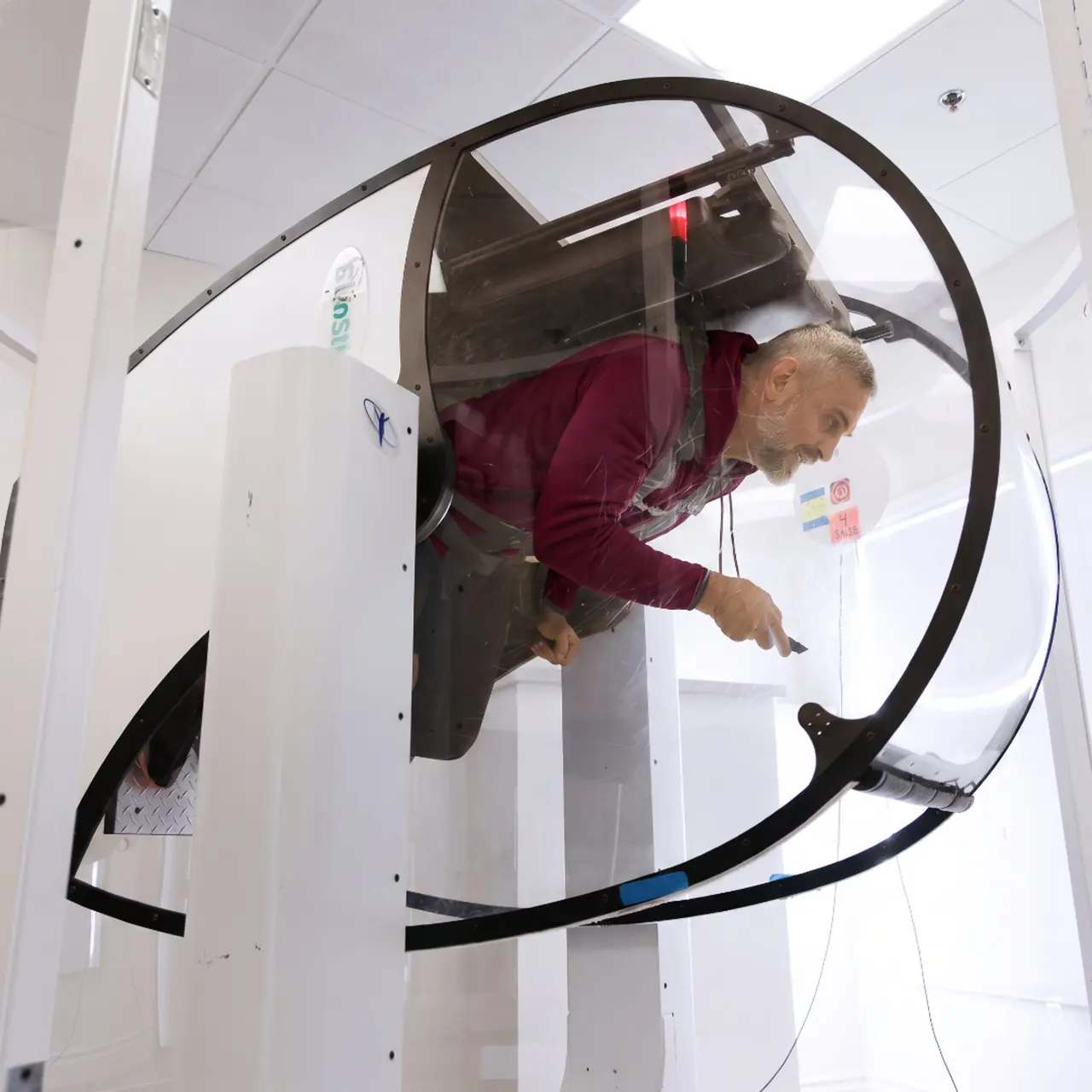
Turning and acceleration often bring on vertigo, so a computer-controlled chair lets us add them in small, measured amounts while you aim at lit targets. Dr. McWhorter, a chiropractor, sets the protocol after a detailed evaluation, exam and review of your history, then adjusts it to your response. See how motion training in the GyroStim chair works.
A small device on the tongue delivers gentle pulses while you do balance and eye-movement exercises. It does not move inner-ear crystals, so it follows your physician's findings. Read about tongue stimulation paired with balance exercises.
Red flags
Most vertigo is not an emergency. Sometimes dizziness is a sign of a stroke or another serious problem.
If vertigo comes with any of these, call 911 or go to the nearest emergency room before anything else.
Source: Cleveland Clinic's guide to vertigo.

Your clinician
Your care is planned by Dr. Jeff McWhorter, D.C., a chiropractor whose practice focuses on functional neurology, concussion rehabilitation, and performance.
He looks at how your inner ear, eyes and body sense work together. Then he builds exercises around your physician's findings and the moments that set off your symptoms, and sends anything outside rehabilitation back to your physician.
Visit
Our office is at 18029 Calle Ambiente, Suite 507, in Cielo Village, Rancho Santa Fe, about two miles from Lake Hodges. Patients come from across North County San Diego, and some fly in; see our guide for patients coming from out of town.
The first step
It depends on the cause. BPPV usually brings brief spins after a change in head position, while vestibular migraine or Ménière's disease follow other patterns. Vertigo that keeps returning or changes should be checked.
Sit or lie down, avoid driving and move slowly until the spinning settles. If it comes with weakness, slurred speech or a severe headache, call 911.
Start with your primary care physician, who may involve an ear, nose and throat doctor, an audiologist or a vestibular therapist. We add balance rehabilitation once the cause is known.
For BPPV, yes, often. A provider can use repositioning moves, such as the Epley maneuver, to guide the crystals back into place. Other causes need other care.
No. Vertigo usually feels like spinning, while the lasting rocking feeling after travel is a separate condition called Mal de Débarquement syndrome.
We explain cost and payment options on your intro call, before you book an exam. The total depends on your exam and how many sessions your plan needs.
Journal
Start with a complimentary 15-minute call with our team.