

Rotator cuff strain or tendinitis
Repeated overhead use, age-related wear or an injury can irritate or tear the rotator cuff tendons. Night pain and weakness are common signs.
Reaching for the top shelf, fastening a seat belt or rolling onto your side at night should not hurt. We find what keeps your shoulder sore and plan care around the tasks you need back.
The short answer
Shoulder pain is pain, stiffness or weakness in the shoulder joint and the tendons and muscles around it, often from rotator cuff strain, overuse or arthritis. At True Performance in Rancho Santa Fe, CA, we examine the shoulder, neck and upper back, then use extremity adjustments, near-infrared light therapy and sports injury rehab.
Overview
It might have started with a new lifting program, a long weekend of tennis or a fall on an outstretched arm. Now reaching overhead pinches, and you cannot sleep on that side.
The shoulder moves in many directions, which also makes it easy to strain. Its comfort depends on the shoulder blade, the upper back and the neck moving well too.
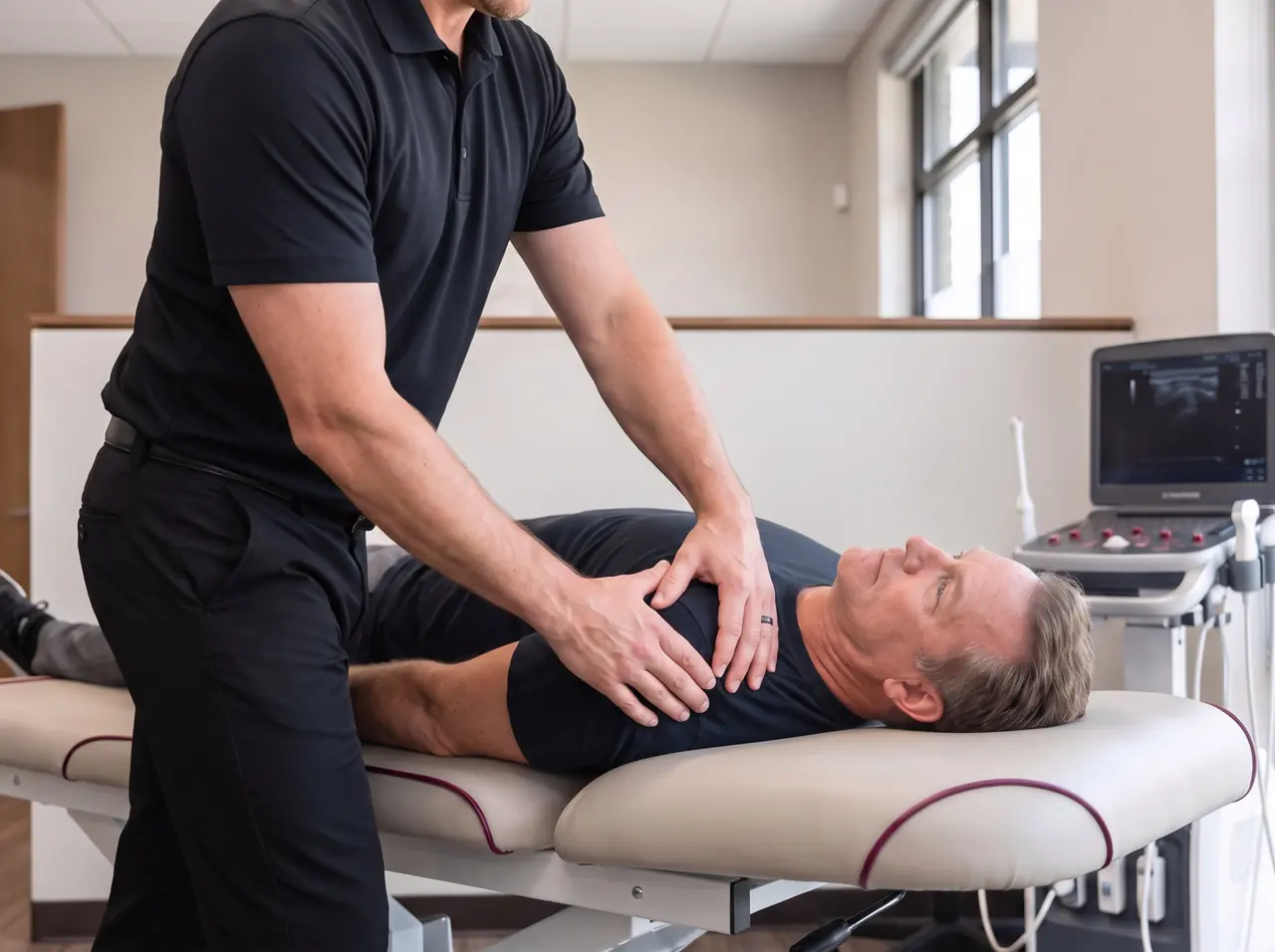
We test reach, rotation and strength, then look at the neck and shoulder blade. Care often begins with shoulder and arm adjustments and exercises for the muscles that steady the joint.
Understanding
Shoulder pain is pain, stiffness or weakness where the upper arm bone meets the shoulder blade. The rotator cuff, a group of four muscles and their tendons, keeps the joint centered, so strain, inflammation or wear in those tissues is a common cause.
A tendon, muscle or the joint lining gets strained or inflamed.
Pain changes how you move the arm, so other muscles overwork.
Stiffness builds, and reaching or lifting gets harder.
The re-check
We re-test your reach, rotation and strength as you go. If the shoulder is not improving, we change the plan or refer you for imaging or an orthopedic opinion.
Yes. An irritated nerve or stiff joint in the neck can send pain into the shoulder and upper arm. When that pattern shows up in your exam, we treat the neck as part of the plan and may point you to our page on neck pain that travels into the arm.
Symptoms
Causes
Repeated overhead use, age-related wear or an injury can irritate or tear the rotator cuff tendons. Night pain and weakness are common signs.
A small fluid sac under the top of the shoulder can become inflamed and pinch when you raise the arm.
The joint lining tightens, and the shoulder grows stiffer and more painful over time.
Osteoarthritis, the wear-and-tear kind, can bring aching and lost motion, often worse after rest.
Throwing, swimming, heavy lifting or long hours with rounded shoulders keep stress on the same tissues.
Our approach
We treat shoulder pain by testing which movements reproduce it and whether the neck or shoulder blade is part of the problem. Care can combine extremity adjustments, near-infrared light and sports injury rehab, with a regenerative therapies consultation when it fits.
Dr. McWhorter, a chiropractor, uses gentle, specific adjustments of the shoulder, neck and upper back, with mobilization and exercises for the muscles around the joint. Read how adjustments for a stiff, painful shoulder are chosen.
Invisible light is placed over sore or stiff tissue while you rest. See near-infrared light therapy for shoulder soreness.
Graded strength and control work when a shoulder injury is keeping you from throwing, swimming or lifting. Explore shoulder injury rehab for athletes.
For shoulder pain that has not settled, we explain whether any available option fits after your evaluation. Book a regenerative therapies consultation for your shoulder.
Red flags
Most shoulder pain can wait for a planned exam. A few signs need medical care first.
If you have chest pressure or trouble breathing, call 911 now; for the other signs, get medical care before booking with us.
Source: MedlinePlus guide to shoulder pain.

Your clinician
Your exam and plan are led by Dr. Jeff McWhorter, D.C., a chiropractor whose practice focuses on functional neurology, concussion rehabilitation, and performance. Before founding True Performance in Rancho Santa Fe, Dr. McWhorter served as a chiropractic consultant to the Denver Broncos, working with elite athletes to improve recovery and performance.
He looks at the whole chain from neck to fingertips, and he will not adjust a shoulder when your exam calls for imaging first.
Visit
Our office is at 18029 Calle Ambiente, Suite 507, in Cielo Village, Rancho Santa Fe. It sits about two miles from Lake Hodges and a short drive from the Del Mar Fairgrounds, Solana Beach and Encinitas.
The first step
Rest from the movement that hurts and change how you do the task for a while. Most shoulder pain responds to simple steps like activity changes, rest and guided exercise.
Book an exam when the pain keeps returning, wakes you at night, limits how you use your arm or lasts more than two to four weeks. Get urgent care after a major injury or a visible deformity.
Guided mobility work and activity changes can help keep the shoulder moving while it stiffens and later loosens. Other problems can look similar, so an exam comes first.
We can test strength and the movements that suggest a tear. If the findings point to a tear, we refer you for imaging and an orthopedic opinion before any adjustment.
Most people with shoulder pain improve without surgery. Surgery is usually for repeated dislocations, some rotator cuff tears or pain that does not respond to other care.
Most shoulder pain settles with rest, activity changes and exercise, according to the OrthoInfo guide to common shoulder problems.
Start with a complimentary 15-minute call with our team.