

Genetics
Genes play an important role, and autism often runs in families. No single gene explains every case.
A noisy room, a change of plans or a long school day can take everything out of a person. Our calm, structured training works on function: attention, focus, coordination and sensory processing.
The short answer
Autism is a lifelong developmental difference in how a person communicates, learns and responds to sensory input. At True Performance in Rancho Santa Fe, CA, neurofeedback and DynaVision cognitive training work on attention, focus, coordination and sensory processing, in coordination with each person's care team.
Overview
For one child it is the move from recess back to class. For an adult it may be a loud open office, a change in routine, or nights of poor sleep that leave everything feeling louder.
Our training looks at the functions behind those moments, such as attention, focus, coordination and settling after sensory overload. The goal is never to change who someone is or make autistic traits disappear.
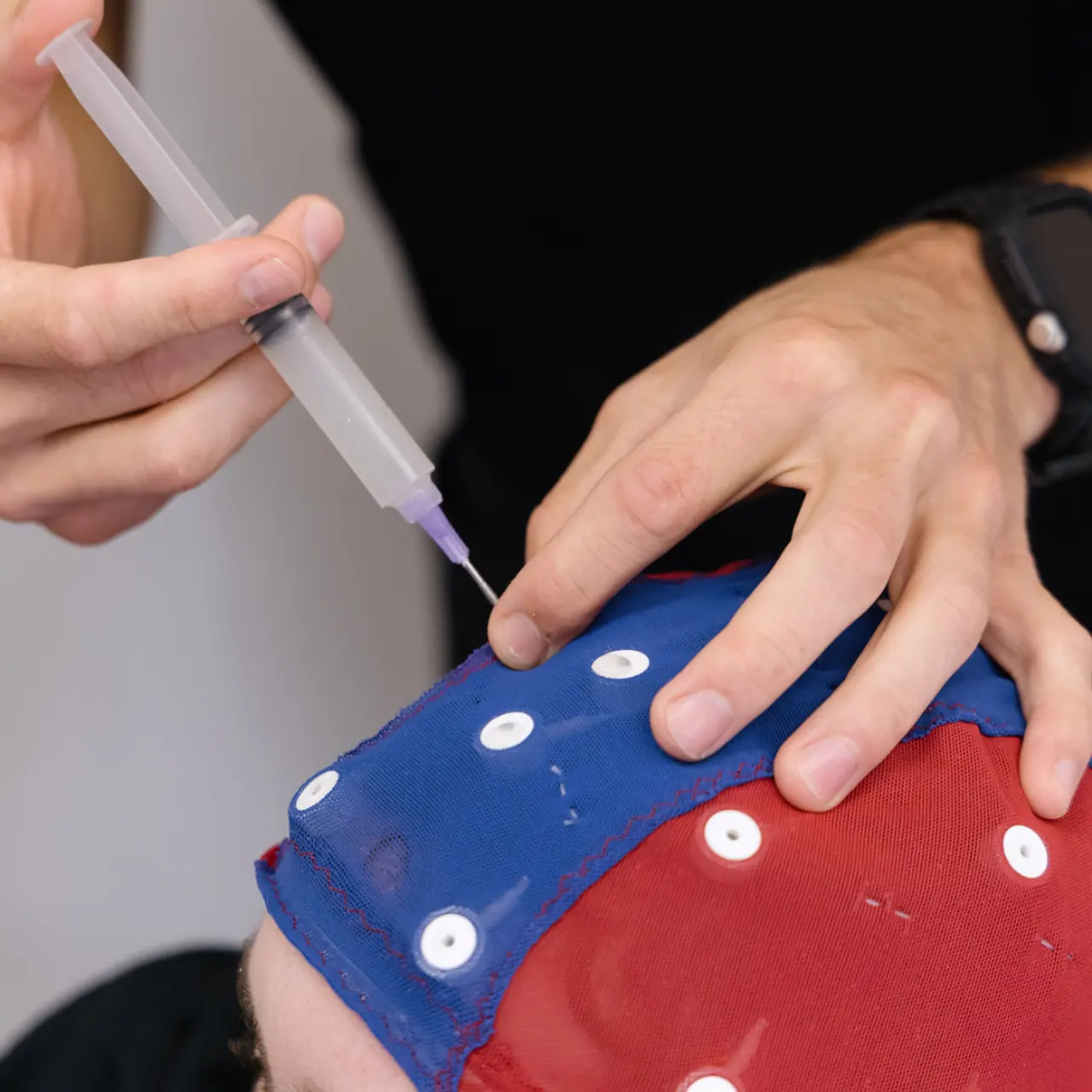
We start by listening to the person and family, then choose function goals that matter at home, school or work. Most plans begin with neurofeedback for calmer regulation and sleep, paced to comfort and set in coordination with the person's care team.
Understanding
Autism, or autism spectrum disorder, is a neurological and developmental condition that affects how people interact, communicate, learn and behave. Signs usually appear in the first two years of life, though some people are not identified until the teen years or adulthood. It looks different in every person.
The brain develops differently from early childhood.
Social cues, sensory input and changes in routine are processed differently.
Stress, poor sleep and sensory overload make hard moments harder.
The re-check
We check progress against the function goals you set, such as steadier attention, calmer transitions or better sleep. If a goal is not moving, we change the plan or pause it.
A developmental pediatrician, psychologist, psychiatrist or a multidisciplinary developmental team usually carries out the evaluation. There is no blood test for autism, so they review developmental history and behavior across more than one setting.
We explain each step before it happens and go at the person's pace. Sensors and screens are introduced slowly, and a parent or caregiver can stay in the room.
Autism is described as a neurological and developmental disorder with signs in the first two years of life in the National Institute of Mental Health's autism overview.
Symptoms
Causes
Genes play an important role, and autism often runs in families. No single gene explains every case.
Differences in how the brain develops before and after birth appear to shape how autism shows up.
Researchers are still studying how genetic, developmental and environmental factors interact.
Stress, poor sleep, routine changes and sensory overload can make difficulties more noticeable. They do not cause autism, and neither does parenting style.
Our approach
Our services are not designed for autism. They work on specific functions, such as attention, focus, coordination and settling after sensory overload. Sessions can include neurofeedback set up from a qEEG brain map and DynaVision cognitive training, paced to the person and planned in coordination with their care team.
Sensors read brainwave activity while sounds or images give live feedback. Sessions practice patterns linked to settling, focus and sleep, with settings chosen from a short qEEG recording. See how neurofeedback goals are set for sensory and sleep concerns.
Rancho Santa Fe only
A light board turns scanning, reacting and switching tasks into a game that trains visual tracking and hand-eye coordination, with scores to track change. Explore light-board cognitive training.

Your clinician
Each plan is overseen by Dr. Jeff McWhorter, D.C., a chiropractor whose practice focuses on functional neurology, concussion rehabilitation, and performance. Neurofeedback sessions are run by our team with Lex Merrifield, our Assistant Clinic Director and Neurofeedback Director.
We ask about the therapies, school plans and family routines already in place, and work in coordination with that care team.
Visit
Sessions take place at our Rancho Santa Fe office: 18029 Calle Ambiente, Suite 507, in Cielo Village. We are about two miles from Lake Hodges, and families drive in from across San Diego County.
The first step
Genetics play an important role, but no single gene explains every case. Having an autistic family member raises the likelihood, and support needs can differ a lot within one family.
No. A developmental pediatrician, psychologist, psychiatrist or developmental team carries out that evaluation. We work on function goals alongside the supports already in place.
No. We work on the situations that cause distress or limit what your child can do, like transitions or sleep. Their personality and interests are not the target.
We go slowly, show each piece of equipment first and stop whenever your child needs a break.
We explain cost and payment options on your complimentary intro call, before you book. The total depends on your evaluation and the number of sessions in your plan.
Yes, they often overlap. If attention and impulse control are the main concerns, see our page on ADHD support for kids and adults.
Start with a complimentary 15-minute call with our team.