

Diabetes
Diabetes is a common cause of peripheral neuropathy. Blood sugar management stays central to care.
Tingling, burning or numb feet can make stairs, uneven paths and a secure grip feel uncertain. We look at which nerves and abilities are affected, alongside the care your physician provides.
The short answer
Neuropathy means nerve damage or dysfunction, most often in the feet, legs, hands or arms, causing tingling, burning, numbness or weakness. At True Performance in Rancho Santa Fe, CA, we review how it affects balance, grip and daily activity. Then we use peripheral nerve stimulation and chiropractic care in coordination with your medical team.
Overview
It may start as mild pins and needles in your toes. Over time you feel less steady on uneven ground, avoid certain shoes or struggle to grip familiar objects.
Several conditions cause similar sensations, so the pattern matters: where it started, how it has spread and which abilities have changed.
We review your physician's findings, your current medical care and how the nerve changes affect walking, balance and hand use. Then we decide which conservative options fit.
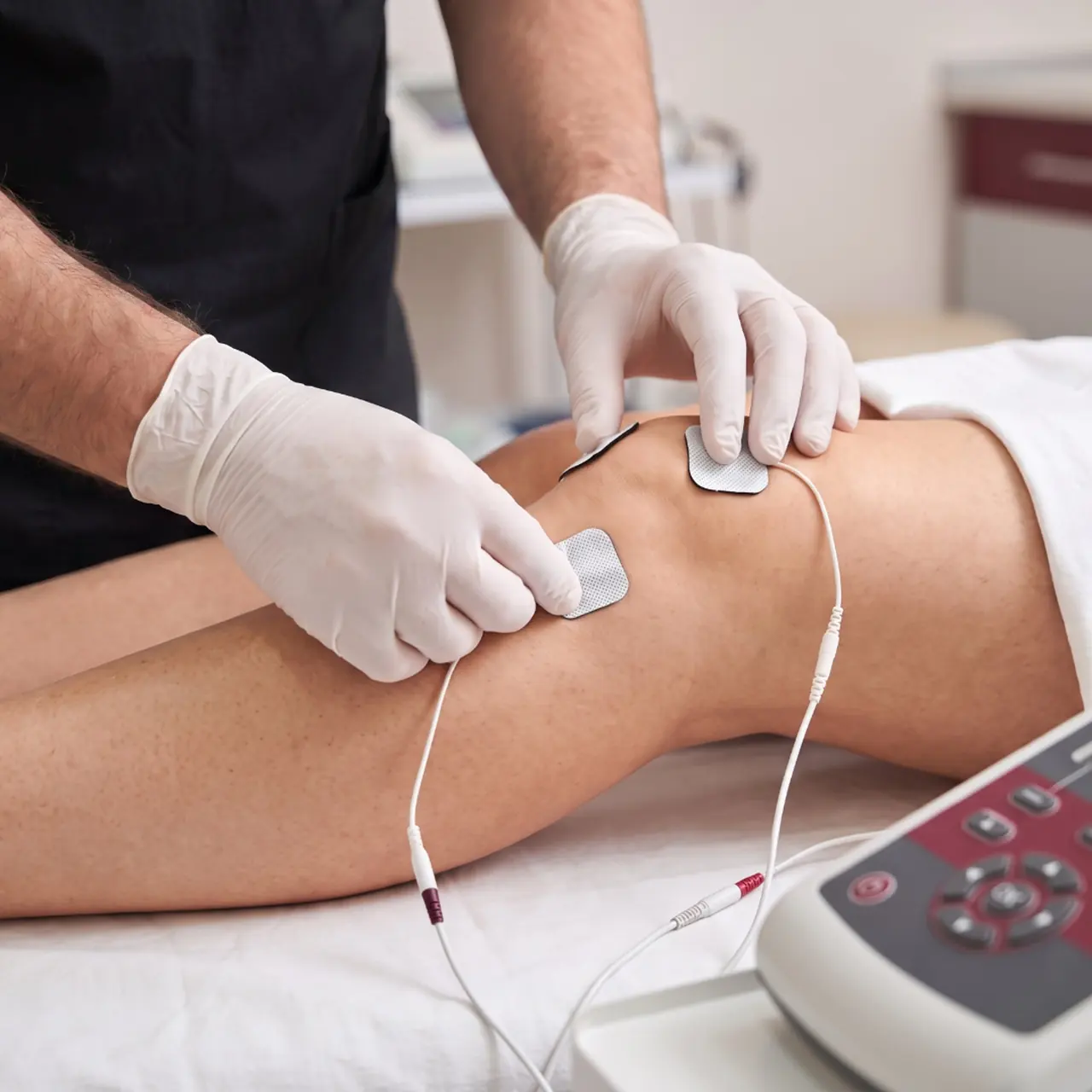
Many plans include nerve stimulation through skin electrodes, with no needles, incisions or medication.
Understanding
Neuropathy is damage to or dysfunction of the nerves, and its effects depend on which nerves are involved. Peripheral neuropathy affects nerves outside the brain and spinal cord, most often in the hands and feet. Diabetes is a common cause, along with injury, nerve compression, circulation problems and some nutrient deficiencies.
Disease, pressure or injury damages a nerve.
Signals for touch, position or muscle control weaken or misfire.
Tingling, numbness, pain or unsteadiness follow.
The re-check
We track sensation, balance, sleep and hand function over your visits. If you are not responding, we change the plan or refer you back to your physician.
Peripheral neuropathy affects the nerves of the arms, hands, legs and feet. Focal neuropathy involves a single nerve or a small group, often causing local pain, weakness or numbness.
Autonomic neuropathy affects nerves that run digestion, heart rate, sweating and bladder control, and cranial neuropathy can affect vision or facial strength. Those two types need medical care first.
Symptoms
Causes
Diabetes is a common cause of peripheral neuropathy. Blood sugar management stays central to care.
Pressure from nearby tissue, or an injury that stretches a nerve, can send tingling or weakness along its path into a hand or foot.
Reduced blood flow can starve nerves of oxygen. A physician may need to separate circulation problems from nerve irritation.
Low vitamin B12 and other deficiencies can affect nerves. Bloodwork shows whether one is involved, so supplements should not start on a guess.
A fall, collision or sports injury can stretch, compress or damage a nerve.
Our approach
Our neuropathy care matches conservative options to the nerve pattern and the abilities affected, in coordination with your medical team. Care can combine peripheral nerve stimulation with chiropractic adjustments when a compressed nerve is part of the picture, and we track balance, grip and daily tasks as the plan runs.
Controlled electrical signals reach selected nerve pathways through electrodes on the skin, starting at a low intensity. Sessions use ReBuilder and SunStim devices. See peripheral nerve stimulation for tingling and numbness.
When joint restriction or tissue tension presses on a nerve, adjustments and mobilization may ease that pressure. They do not replace medical care for disease-related neuropathy. Learn about chiropractic care for a pinched nerve.
Red flags
Some nerve changes need a physician promptly.
If you notice any of these, contact your physician promptly, and go to the emergency room for sudden weakness.

Your clinician
Dr. Jeff McWhorter, D.C., is a chiropractor whose practice focuses on functional neurology, concussion rehabilitation, and performance. He connects your exam findings with the tasks that have become harder: stairs, uneven paths, driving, typing or carrying things.
His background in neurological rehabilitation and balance training shapes a plan that tracks sensation, coordination and confidence, not just pain scores.
Visit
Our office is at 18029 Calle Ambiente, Suite 507, in Cielo Village, Rancho Santa Fe, about two miles from Lake Hodges. If a family member drives you, they are welcome to join the first visit and hear the plan.
The first step
Yes. New, unexplained, worsening or widespread nerve symptoms should be checked by a physician, who can test for the type and cause. We review those results before recommending care.
It can help when joint restriction, tissue tension or mechanical pressure irritates a nerve. It does not replace medical care for neuropathy caused by diabetes or another disease.
Results vary with the cause, the severity and how long the nerves have been affected. Care may focus on comfort, balance, coordination and daily tasks, and progress is not predictable.
Check your feet every day, wear shoes that fit well and have any blister, sore or redness seen early. Reduced feeling means an injury can go unnoticed.
We explain cost and payment options on your complimentary intro call, before you book an exam.
When neuropathy dulls the feeling in your feet, you may not notice pressure or injuries that lead to blisters and sores, as the NIDDK guide to peripheral neuropathy explains.
Start with a complimentary 15-minute call with our team.