
Contents
A defender reads the pass a moment late. A hitter picks up the pitch a beat after he should. The difference between those plays often comes down to reaction time, and reaction time can be trained.
At our Rancho Santa Fe office, athletes train it on the DynaVision D2 light board as part of DynaVision cognitive training for athletes. This guide explains what reaction time is made of, how the board is used, how much the scores can be trusted, and what the research does and does not show about carryover to the field.
What is reaction time in sport?
Reaction time is the time between a cue and your response to it. In sport it has three parts: seeing the cue, deciding what to do and moving. Simple reaction time uses one cue and one answer. Choice reaction time, which most sports demand, adds a decision between several options.
Researchers often split the total into visual reaction time, the moment you register the cue, and motor reaction time, the moment you complete the movement. Both can be measured, and both can change with training.
Game situations add pressure. You react while tired, while tracking several players and while your eyes move across a wide field.
What is the DynaVision D2?
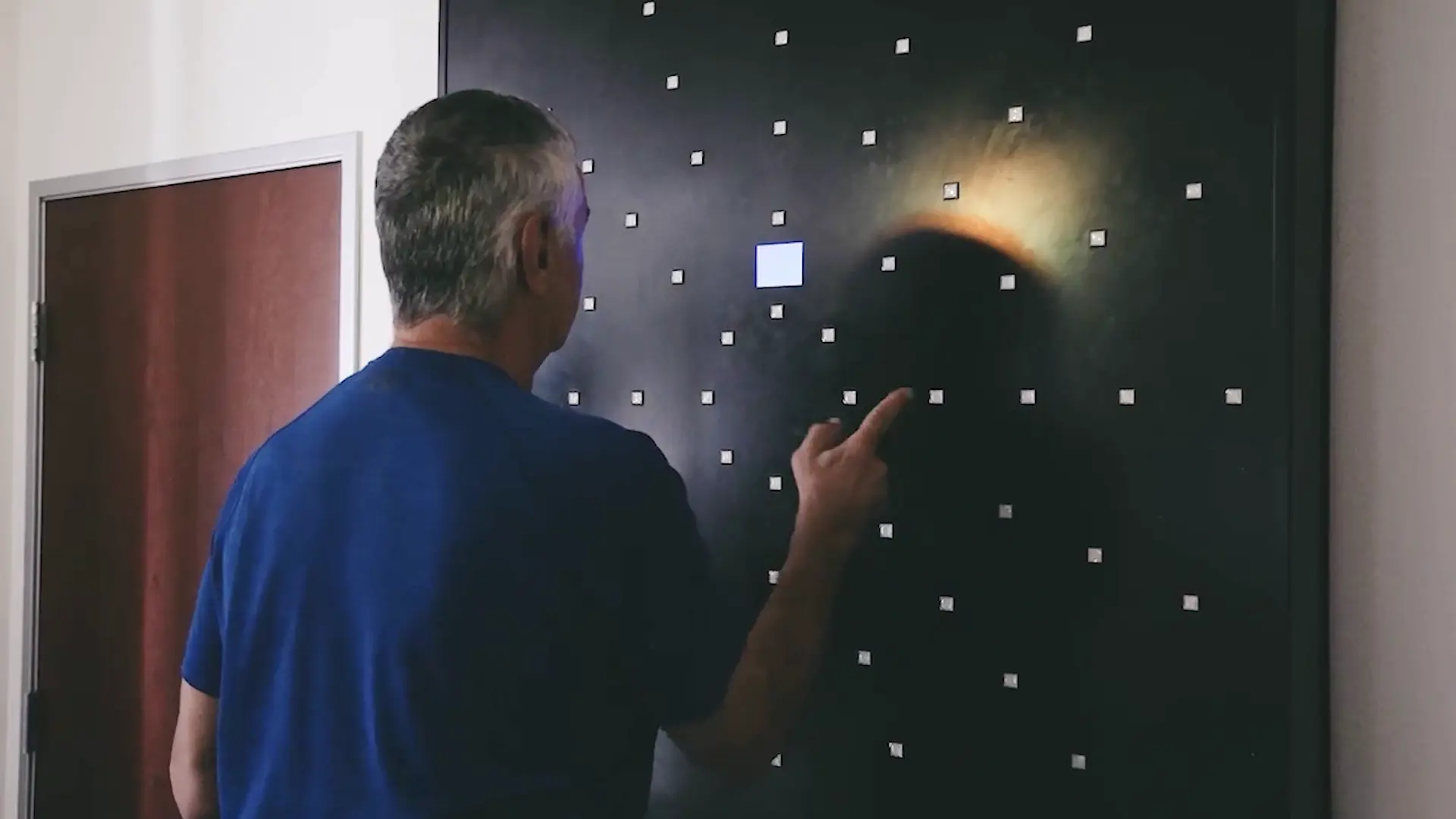
The DynaVision D2 is an interactive light board covered in buttons. Buttons light up across the board, and you hit each one as fast and as accurately as you can. Its maker describes it as a device that records your reaction to light to train peripheral awareness, hand-eye coordination and visual reaction time.
Rehabilitation, sports, tactical and military professionals use it, from athletic trainers to chiropractors. A small screen in the center can show numbers or words, which adds a thinking task on top of the reaching task.
The board is a training tool, and we use it that way.
Keep in mind
DynaVision's maker states it is not intended as medical care for any condition, including concussion or other brain injury.
The board's purpose, its users and its limits are set out in Dynavision International's description of the D2.
What does a DynaVision session look like?
A session starts with a baseline run, then moves through short drills matched to your sport and position. The board records reaction time and accuracy on every drill, and the next drill is adjusted to your results. Speed, light location and task difficulty all rise as you improve.
Drills are built around what your sport asks of you. A goalkeeper, a quarterback and a tennis player do not need the same pattern.
- Hit buttons as they light up, as fast and accurately as you can
- Keep your eyes on the center while lights appear at the edges
- Read a number or word in the center display while you reach
- Respond to one color and ignore another
- Work while balancing or moving, to add body control
How reliable are DynaVision scores?
In a study of 42 active young adults, DynaVision gave moderate to strong reliability for visual reaction time and more complex reactive tasks, with fair reliability for motor reaction time. The researchers found that one to three practice trials were needed before the scores settled.
That finding shapes how we test. Early sessions include practice runs, because the first few scores partly reflect learning the board.
Your baseline is set once your numbers stabilize. Progress is then judged against your own baseline, not against another athlete or a chart.
The reliability figures come from a 2014 reliability study of the Dynavision D2 in the Journal of Sports Science and Medicine.
Does light-board training carry over to the field?
Here the evidence is thinner. Practice clearly raises scores on the drills themselves, as the practice effect in the reliability study shows. Proof that board gains turn into better performance in games is still limited.
One well-known example is a University of Cincinnati baseball program that added vision training, DynaVision included. The team's batting average rose from .251 to .285 the next season. The study had no control group, and a change to college bat rules that same year may have played a part.
Our approach is to treat the board as one tool. We pair it with sport-specific movement and re-test the skills that matter to your position.
The batting figures and the study's limits are reported in the University of Cincinnati vision training study in PLOS ONE.
Who is reaction time training for?
Reaction time training suits athletes at any level who want to see, decide and move with more precision. It also suits active adults whose reactions or visual awareness have slipped, and people returning to sport after an injury once a physician has checked it.
- Football, basketball, hockey, baseball, soccer and tennis players
- Golfers, combat athletes, motorsport drivers and goaltenders
- Active adults who want sharper awareness and coordination
- Athletes returning after an injury, once a physician has checked it
How does DynaVision fit after an injury?
After a concussion, reactions can slow. The CDC lists sudden slowing of reaction time among the signs coaches and parents may notice.
Light-board drills come in only after a physician has checked the injury, and only within what you tolerate. Symptoms that flare with bright lights or busy screens are a reason to wait, and we lower the challenge if symptoms climb.
Slowed reactions appear on the CDC HEADS UP list of concussion signs.
What should athletes take away?
Reaction time is a skill with three parts, and the DynaVision board measures it reliably once you have had a few practice runs. Gains on the board are real, and turning them into gains on the field takes sport-specific practice alongside it.
For a program that starts with a baseline and scores every visit, explore a scored reaction-time program on the light board. It is one part of our performance and rehab care for athletes in North County, available at our Rancho Santa Fe office.
Frequently asked questions
How soon will my reaction time improve?
It depends on your baseline, your goals and how often you train. Early score jumps partly reflect learning the board, so we set your baseline after a few practice runs and track change from there.
Is DynaVision just a video game?
No. You work with your whole upper body, often while standing or balancing, and the board records reaction time and accuracy on every drill. Thinking tasks in the center display make you decide while you move.
Can I use DynaVision after a concussion?
Only after a physician has checked the injury, and only within what you tolerate. Its maker states the board is not meant as medical care for concussion or other brain injury, so it is used as skill practice inside a wider plan.
Is DynaVision available at the Newport Beach office?
No. DynaVision cognitive training is available at our Rancho Santa Fe office only. Ask on your intro call about the services offered at each office.
Is reaction time training only for professional athletes?
No. Professional athletes train here, and so do college, club and recreational athletes and active adults. Drills are set to your level and your sport.
Find out how your reactions measure up
Start with a complimentary 15-minute call with our team.